
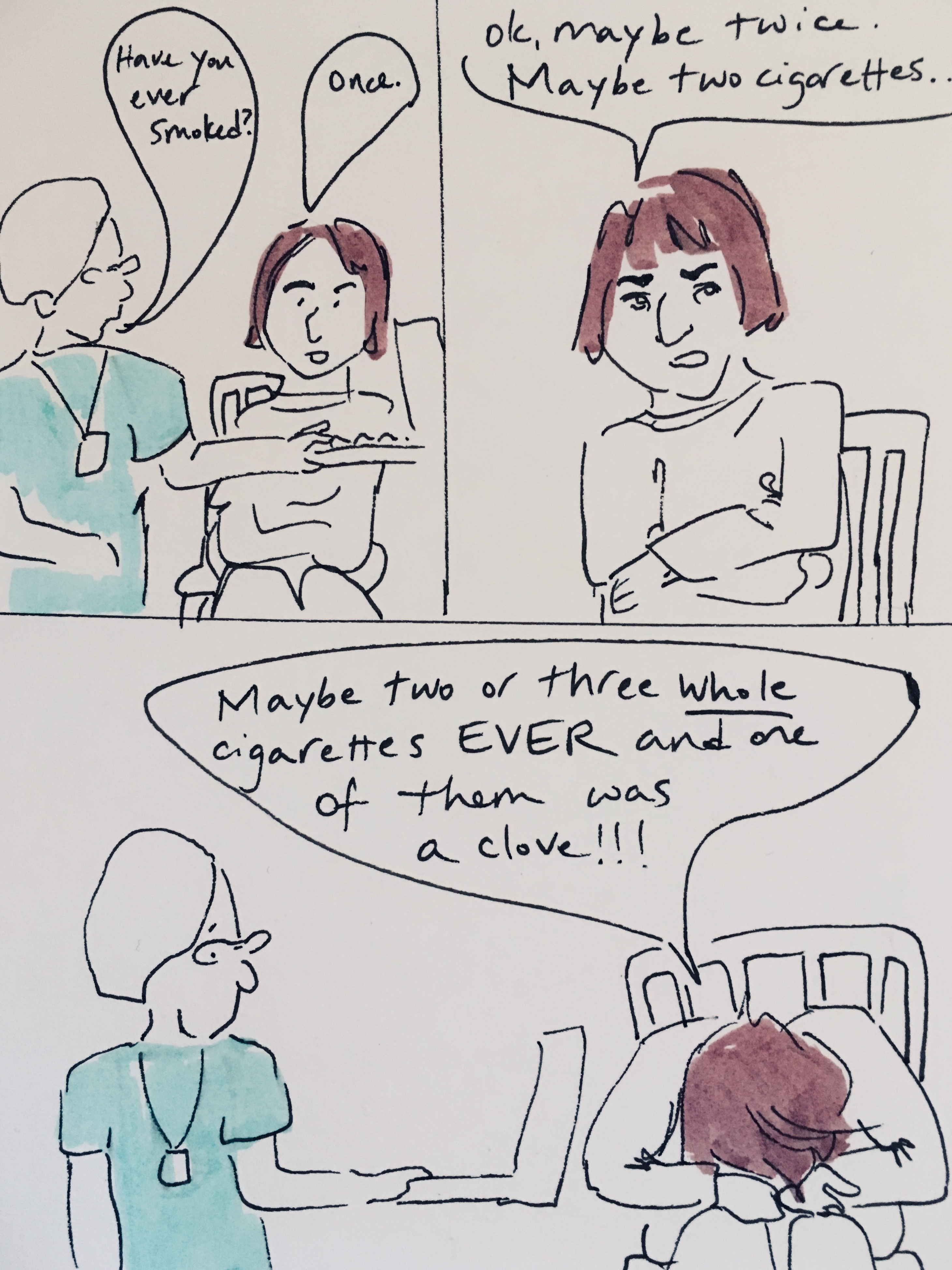
Since my diagnosis I’ve been in a lot of doctor’s offices, and this is a question commonly asked of new patients (along with drug allergies, the date of your last menstrual period, etc.). But now that I have this rare form of oral cancer, it feels somehow loaded. Is it all my fault? Did I do something wrong? I’m pretty sure the answer is no, but it’s taken me a while to accept this (and truth be told, I’m still working on it). Here’s a bit on how I’ve tried.
When the oral surgeon first told me that I had MASC, I sat in shock, blinking for a few moments before asking, “Why? What did I do? Did I do something?” She assured me that it was not because of something I had done–that although this form of cancer was rare and relatively new, I didn’t fit the profile of those more commonly at risk for it (men in their 50s-60s). Most likely, she said, it was the result of a genetic aberration. I then asked if I should do anything differently now that I had the diagnosis, any lifestyle changes I should immediately make. She looked pained to have to tell me no, not necessarily.
For a few weeks after that, during the agonizing period of waiting for my next appointment, PET and CT scans, more information, etc., I remained unconvinced and felt paranoid about every decision I made. Should I not have a glass of wine with dinner? Should I cut out my morning coffee altogether? Should we stop using dryer sheets with our laundry? Should we only buy organic produce? I realize, now, that I was in a very vulnerable state, and casting about for some sense of control in a situation where I had very little. These changes would have been more or less negligible although, at the time, I thought they were a matter of life and death (and yes, I know there are folks out there who disagree–more to come on them later). Anyway, I was trying to rationalize what was happening to me, and the only rationale I could seem to latch onto was the notion that I deserved cancer because I had done something wrong. If I did that particular thing (or things) right, I could stop it or stave it off.
I’m fairly certain this line of thinking is both natural and flawed. I didn’t get cancer because I’m not in perfect health or perfect shape or didn’t make the right choices at every turn, whatever those may have been. I often remind myself of Olympic gold medalists who have been diagnosed with cancer, like Kikkan Randall and Nathan Adrian and Lance Armstrong. Or, you know, young children. There’s absolutely no way they invited or “deserve” something like this. No one does. Health, illness, mortality, these things aren’t as meritocratic as we might like to believe (again, the appeal there being the sense of control such a system or logic would afford). As the bard said, they’re “the slings and arrows of outrageous fortune” and every living being is always already making the noble choice to suffer them. They, we, I, deserve nothing but compassion.
 Well, then