The postmodern poetry of pathology reports

For a time now, I’ve been able to put cancer behind me. I’m doing–and thinking about–other things. But this Friday, I have my first post-treatment CT scan, and it’s looming large on the horizon. I keep rehearsing the afternoon’s appointment in my head by recalling how things went down the first time. Drinking that awful barium sulfate solution, alone, in a freezing cold room; the brisk manner of nurses and lab techs; lying on yet another narrow table; feeling the contrast dye saturate my veins; repeating the mantra I said to myself, before, as the machine pivoted around me: My body is a dark city, my body is a dark city. Like London during the blackouts of WWII, I don’t want it to light up. (Obviously, my understanding of how these things work is vague, but I believe the radiologists are looking for some kind of “activity”–for cancer cells to react to the chemicals coursing through my body by luminescing.)

For some reason, my mind also keeps going back to my initial pathology report. I don’t know why doctors give these to patients; mine consisted of a dense paragraph of medical jargon followed by this stand-alone sentence, in all caps:

THE LESION IS MALIGNANT.

Reading it felt like the closest I might ever come to visiting an oracle. But what seemed, at the time, like a fixed decree–an intractable fate–has since revealed itself to be a bit more pliant. Much can still be done in the wake of such things; choices can still be made. Which may be why I’ve been questioning some of my own lately. Small ones, like becoming irritated in traffic, or with the endless stream of students filing into my classroom to borrow my stapler this morning. Do I, alone, have the earth’s last functioning stapler, I wondered. And then I took a deep breath, a proverbial step back. I do a lot of that now. Trying to notice how I’m responding to certain things and why. Trying to hold onto the perspective that the past nine months has brought, though it was dearly purchased (does perspective ever come cheaply?). Is this worth the worry or frustration it’s causing me? Can I let it go? We all have so many heavy things to carry. Friday’s appointment is one of mine.
As for heaven…

Today I received yet another card in the mail from my mother-in-law’s hairdresser, which makes this post as good a place as any to acknowledge that I haven’t gotten through this alone. Not at all. My mother-in-law’s hairdresser’s name is Angie; I’ve never met her and she lives two hours away, in the town where my husband grew up (she actually gave him his first haircut!). But, since my mother-in-law shared my diagnosis with her several months ago, I’ve received so many sweet and encouraging cards from this woman. And it hasn’t just been her. I literally cannot count the number of folks who have surfaced from so many different corners of my life to offer their support and well wishes in some way–my students, their parents, my daughter’s daycare center, my dental hygienist, my colleagues, my friends, my family, even strangers. It’s floored me, in fact. So, whenever someone comments that I seem to be handling things rather well, or that I’m brave, I’m reluctant to take much credit. It’s not hard to be brave when you’re bolstered by the love and concern of so many people, as I have been.

Reflecting on this now reminds me of when I was driving home from having my blood drawn for my first PET and CT scans, just after my initial diagnosis. I felt very terrified and alone; thoughts of death crowded my consciousness (as is common after learning that you have cancer). What about heaven, I remember thinking to myself. It just sounds too good to be true… But you could also say the same of this life.

Some dark humor on a bright day

I confess to having thought this just after I received my cancer diagnosis, when the future suddenly seemed no longer a given. This weekend, we celebrated my daughter’s 5th birthday and man, did I relish it. I might be losing my sense of taste soon (radiation begins tomorrow), but life has never had a sweeter savor… All the cliches you hear are true, damn them.

It’s not your fault

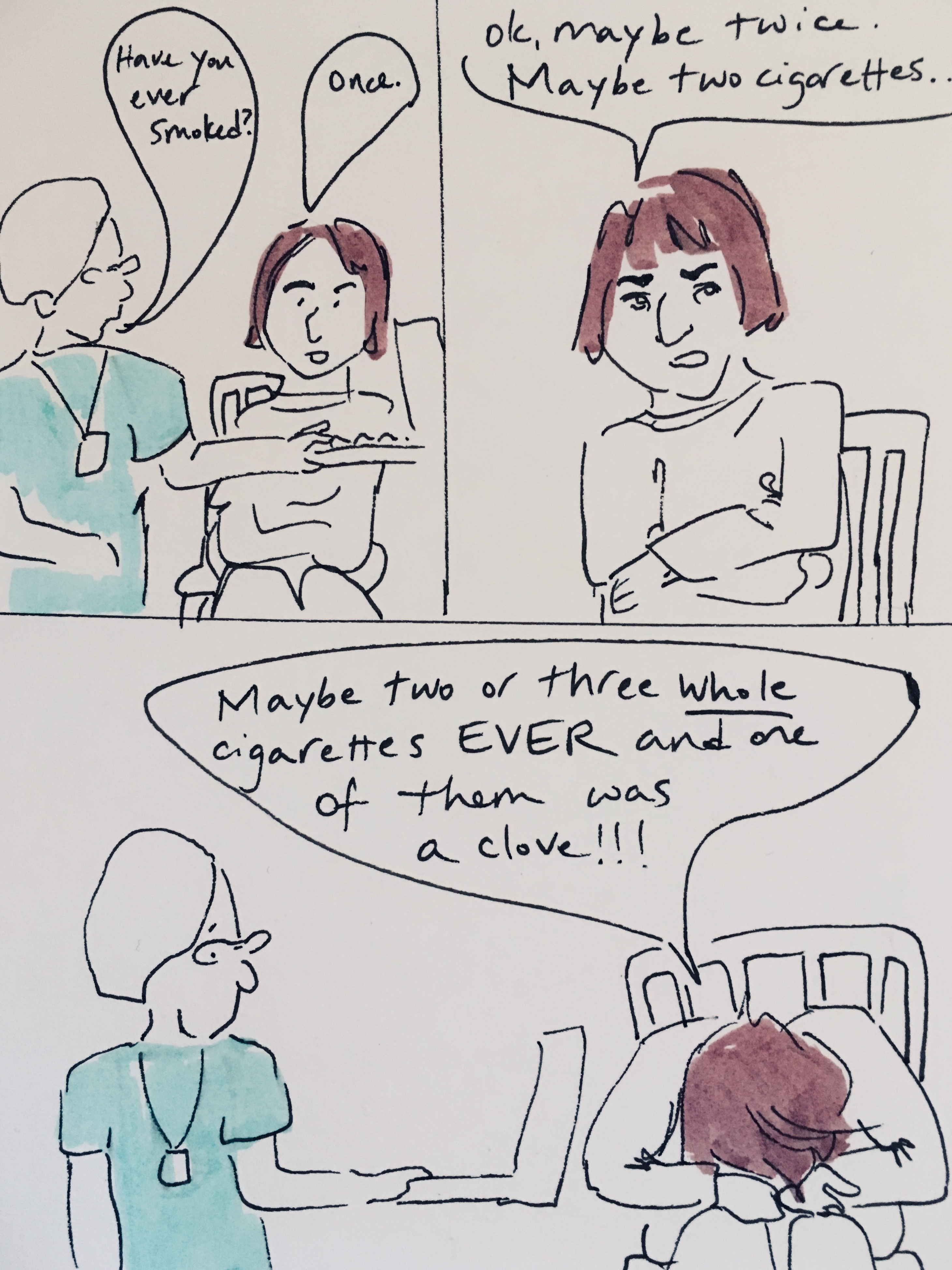
Since my diagnosis I’ve been in a lot of doctor’s offices, and this is a question commonly asked of new patients (along with drug allergies, the date of your last menstrual period, etc.). But now that I have this rare form of oral cancer, it feels somehow loaded. Is it all my fault? Did I do something wrong? I’m pretty sure the answer is no, but it’s taken me a while to accept this (and truth be told, I’m still working on it). Here’s a bit on how I’ve tried.

When the oral surgeon first told me that I had MASC, I sat in shock, blinking for a few moments before asking, “Why? What did I do? Did I do something?” She assured me that it was not because of something I had done–that although this form of cancer was rare and relatively new, I didn’t fit the profile of those more commonly at risk for it (men in their 50s-60s). Most likely, she said, it was the result of a genetic aberration. I then asked if I should do anything differently now that I had the diagnosis, any lifestyle changes I should immediately make. She looked pained to have to tell me no, not necessarily.

For a few weeks after that, during the agonizing period of waiting for my next appointment, PET and CT scans, more information, etc., I remained unconvinced and felt paranoid about every decision I made. Should I not have a glass of wine with dinner? Should I cut out my morning coffee altogether? Should we stop using dryer sheets with our laundry? Should we only buy organic produce? I realize, now, that I was in a very vulnerable state, and casting about for some sense of control in a situation where I had very little. These changes would have been more or less negligible although, at the time, I thought they were a matter of life and death (and yes, I know there are folks out there who disagree–more to come on them later). Anyway, I was trying to rationalize what was happening to me, and the only rationale I could seem to latch onto was the notion that I deserved cancer because I had done something wrong. If I did that particular thing (or things) right, I could stop it or stave it off.

I’m fairly certain this line of thinking is both natural and flawed. I didn’t get cancer because I’m not in perfect health or perfect shape or didn’t make the right choices at every turn, whatever those may have been. I often remind myself of Olympic gold medalists who have been diagnosed with cancer, like Kikkan Randall and Nathan Adrian and Lance Armstrong. Or, you know, young children. There’s absolutely no way they invited or “deserve” something like this. No one does. Health, illness, mortality, these things aren’t as meritocratic as we might like to believe (again, the appeal there being the sense of control such a system or logic would afford). As the bard said, they’re “the slings and arrows of outrageous fortune” and every living being is always already making the noble choice to suffer them. They, we, I, deserve nothing but compassion.

Onto radiation

Yesterday, I met with my radiation oncologist for the first time. The waiting room was packed, even at 8:45 am. I realized, once again, that I’m not the only person going through this. Lots of people are. In fact, that’s one of the funny things about cancer. At this point, virtually everyone knows someone close to them who has had it and, in many cases, recovered. Which makes it feel something like the common cold, or allergies. But, you know, a cold that could kill you. It’s a gnawing paradox. As is the fact that every medical waiting room I’ve been in lately has a giant flat screen streaming HGTV. What’s up with that? It just incites ire (in me anyway) to think about how much less a complete home renovation costs than the healthcare we’re all sitting there waiting for.

I was called back to meet with Dr. Higgins in relatively short order, and she was lovely. Calm, composed, empathetic, informative, funny. She took her time with me, which is something I’m really beginning to appreciate in doctors, especially when their waiting room looks like the airport gate for a delayed flight. I’m wary of essentializing gender in any way–I believe that most of it is culturally constructed and imposed–but my experience with female doctors has been markedly positive. That said, it also threw me for a loop that she was roughly my age; for so much of life, doctors are always reassuringly older than you (and yes, I’m aware that this is a form of ageism).

Anyway, she walked me through the next steps of my treatment, as well as the possible side effects, which are varied and intimidating (loss of taste and appetite, severe dry mouth, painful sores, etc.). I will have radiation to my “oral cavity” everyday (excluding weekends) for six weeks. It will be particularly difficult towards the end of that time, and recovery after radiation could take up to six additional weeks. Needless to say, any summer beach plans are now on hold. But that’s ok. I’m on a bit of an unexpected detour in life, and the beaches will still be there when I return to the main road (where I won’t leave my kid in the car).

Some thoughts on the final season of Catastrophe…

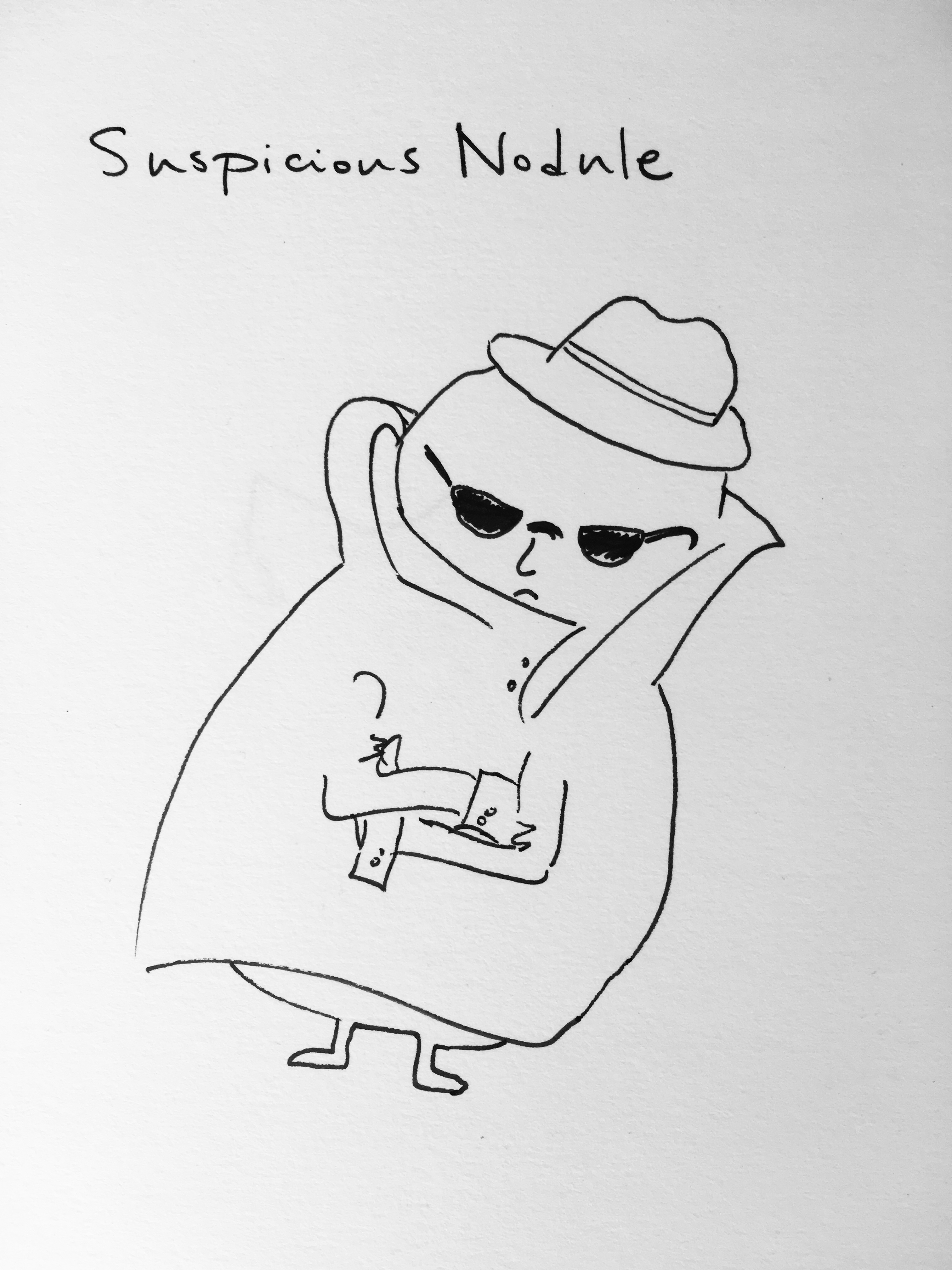
First things first: my thyroid ultrasound came back clear! Or, to use the hard-boiled detective language of my doctors, there were no “suspicious nodules” to be found. [INSERT FUNNY CELEBRATION GIF HERE, because I don’t know how to yet].

In other news, my husband and I finished watching the final season of Catastrophe last night. It’s a beloved show in our household, but season 4 (and, in particular, the last episode) left me fuming. [Note: spoilers ahead.] WHERE WERE THE CHILDREN?!? Admittedly, Rob & Sharon’s two kids have long been inconspicuous additions to the cast, but this season, that was especially the case. For the first few episodes, I thought that maybe their baby daughter had died and I somehow missed it?!? There was no mention of her; no scene in which she appeared. Muireann finally shows up in a later episode, on the floor beside her parents’ bed (at which point my husband quipped, “See? She’s been under their bed this whole time.”). Then, in the penultimate scene of the last episode, Rob & Sharon take a walk together after his mother’s funeral, pushing a visibly empty stroller. They’re talking about some heavy stuff, but heavier, still, than their floundering marriage is, I would venture, their missing child. Make that children. Where the hell is Frankie?!?

Which brings us to the final scene of the final episode [Note: spoilers immanent]. Rob & Sharon are driving along a lovely, deserted coastline, with both kids asleep in the back of the car. Sharon asks him to pull over so that they can get out and talk, which he does. They share a meaningful, tender exchange, then go quasi-skinny dipping WHILST THEIR CHILDREN ARE STILL IN THE CAR ON A WARM DAY IN THE SUMMER.

I’m sorry, but you can’t be a show that traffics, refreshingly, in a kind of graphic realism (think back to the scene when Dave OD’s, Rob frantically administers CPR, and they both barf all over each other; or when Sharon’s leaking breast milk stains her blouse, or, etc.), and then LEAVE two children in a hot car on the side of the road while you take a spontaneous swim. In reality, when you stop the car, babies frequently wake up and start crying (it has been established, through various dinner scenes, that Frankie is mute). I know it’s a metaphor and all–making a marriage and family work is like swimming out into a riptide; it’s a wild gamble–but other things are not. Those kids are toast.

Cancer, conundrums, cartoons

I finally came up with a tagline! Isn’t that enough for one day? Unfortunately, no. I also have to visit the dentist (incidentally, where all of this began), and continue awaiting that phone call re: my thyroid ultrasound. Like most people, I don’t enjoy the dentist. It’s mostly the noises their tools make, although I do relish the soft rock/easy listening music it’s so often paired with.

In related news, a friend recently asked how my MASC was diagnosed, and I figured I should share that, here. This past summer, my dentist fitted me for a bite guard because I grind my teeth at night, and something about the way I moved my tongue after inserting the guard caused me to feel a small, firm lump on its underside. It didn’t hurt or bother me in any way–I only noticed it when making certain movements with my tongue that I don’t ordinarily make (sticking it way out, for example. Are you pleased, dear reader, to find that, as a thirty-nine-year-old, I don’t regularly stick my tongue out at people? You should be). So, I told my husband and asked if he thought it was anything to be concerned about. He said probably not, but I should check back with the dentist, anyway.

Fast forward a month or two from that, and I finally drag myself into the dentist’s office, unscheduled, to ask if he could take a quick look at my tongue. He graciously agreed to, poked and prodded a bit, then sent me away with a referral to an oral surgeon to have it biopsied. It didn’t look like other oral cancers he had seen, he assured me, but it’s better to be safe than sorry.

It wasn’t until a few months after that visit that I actually had the biopsy (work and holidays threw a wrench in things), which came back as positive for mammary analogue secretory carcinoma. The doctor who shared this news with me was extraordinarily gifted at doing so; she pulled her wheelie stool close to my chair, leaned forward, looked me directly in the eyes, and confessed to being as pained and shocked by it as I was. I remain grateful for (and a little in awe of) her forthrightness and compassion. She then referred me to my surgical oncologist, and here we are, a little over a month out from my operation.

I am nervous about the next steps; I meet with my radiation team for the first time this week (and will report back here), but I’m trying not to let my mind get ahead of me. “Suffer once,” my therapist wisely advised. Today, I feel good and am thankful.

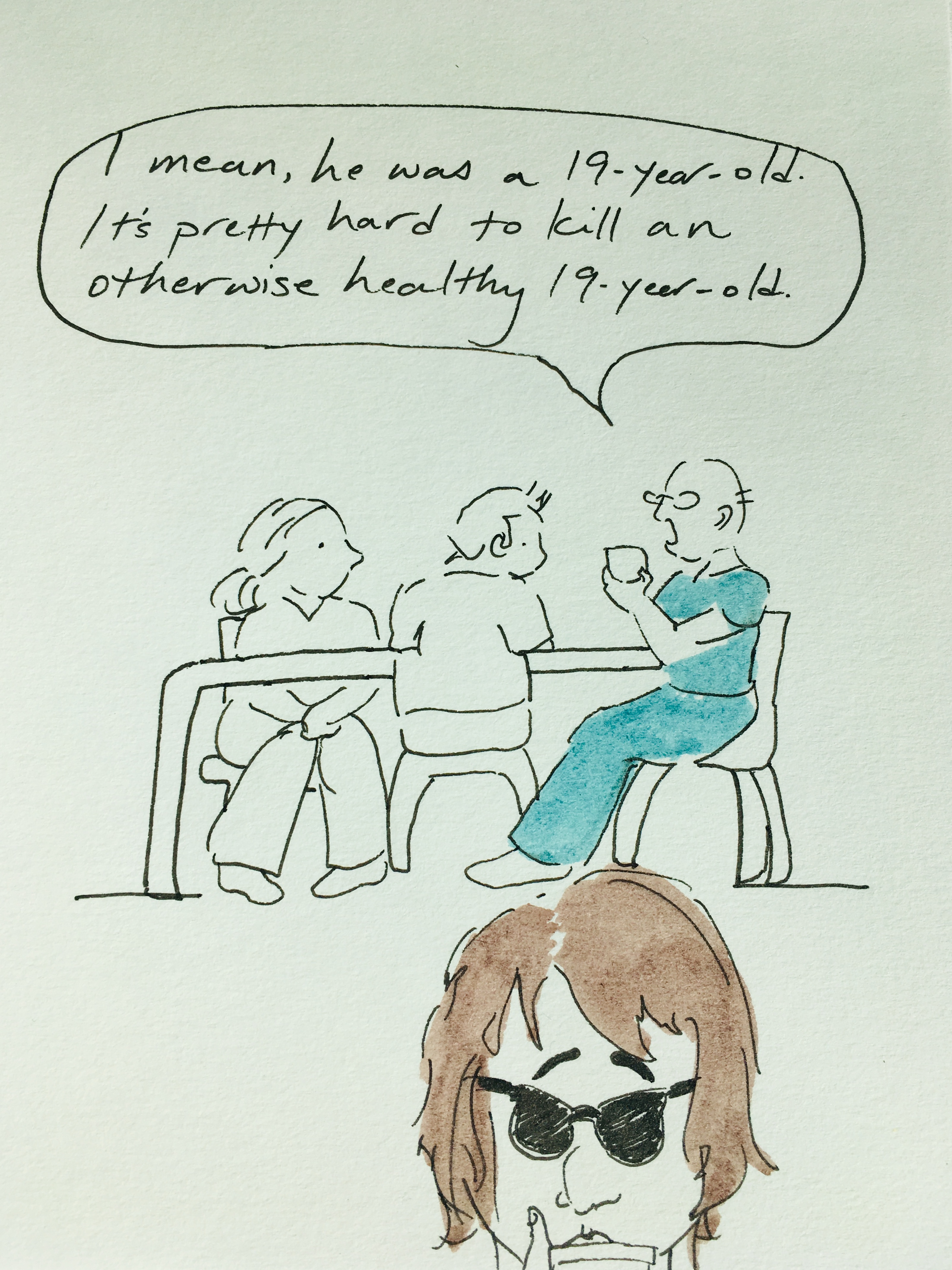
Doctors off the record

The other day I stopped by a coffee shop where I overheard the confab, above, between an older surgeon (he was in scrubs with a hospital badge & I asked him what he did there, so that’s how I know) and some younger residents. Pretty relieved I heard this after my own procedure.

Some days it’s harder to laugh than others

This morning I went to visit my friend, Kate, in the hospital. She’s been battling cancer for more than a decade, and is currently fighting an infection from a recent surgery. It felt something like a pilgrimage, going to see her. I suppose this is because witnessing another’s suffering feels holy, is holy. As is the suffering, itself. You’re taken out of time, somehow, and placed in another dimension. A hushed dimension of latex gloves and gowns, popsicle wrappers and empty coffee cups, drips and drains–the curious consolidation of life in a tiny room with a seismic purpose.

It was good to see her. It also gave me deja vu; I was recovering from surgery in a hospital bed not long ago, myself. I remembered how all of the smallest things presented a challenge–lifting a cup to drink carefully from a straw, the strain of simply moving, shifting, or adjusting my position in any way. My nurses would write “goals” on the dry erase board in my room that graduated from “pain management” to “going to the bathroom” to “walking.” Like I was being born all over again and rushing through toddlerhood in the space of a week. In my case, the comparison seemed especially apt because I was also re-learning how to consume liquids, then purees, then solid foods with my new (I won’t exactly say mangled, but yeah, mangled) tongue.

Kate means a lot to me because not only was she a wonderful colleague when we worked together, but she also played host to my daughter’s first Thanksgiving. My husband had to work that Thursday; I wasn’t ready to travel, solo, to see family with an eight-month-old; and most of my friends were out of town. I felt a bit stranded and lonely, and Kate graciously invited us over. I remember her ducking to check on the turkey while her husband danced around the kitchen with my daughter, singing “Can’t Help Falling in Love” in a surprisingly good baritone. In fact, I’ll never forget it. So a visit today seemed like the smallest possible return gesture for that lasting kindness.