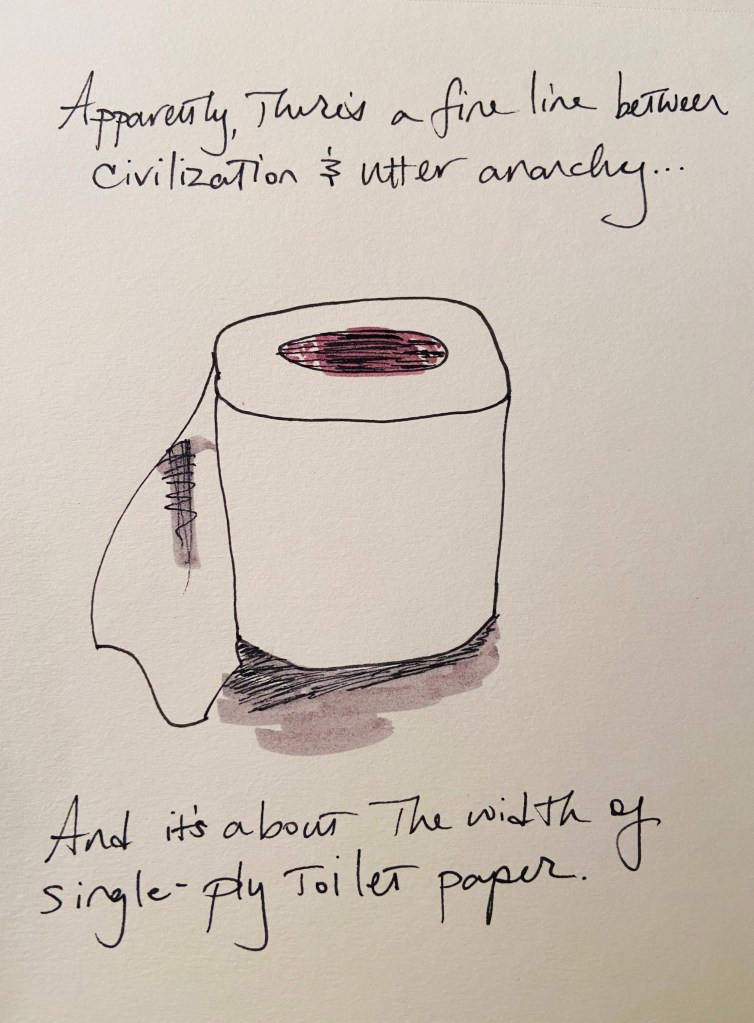
There’s no place but home…

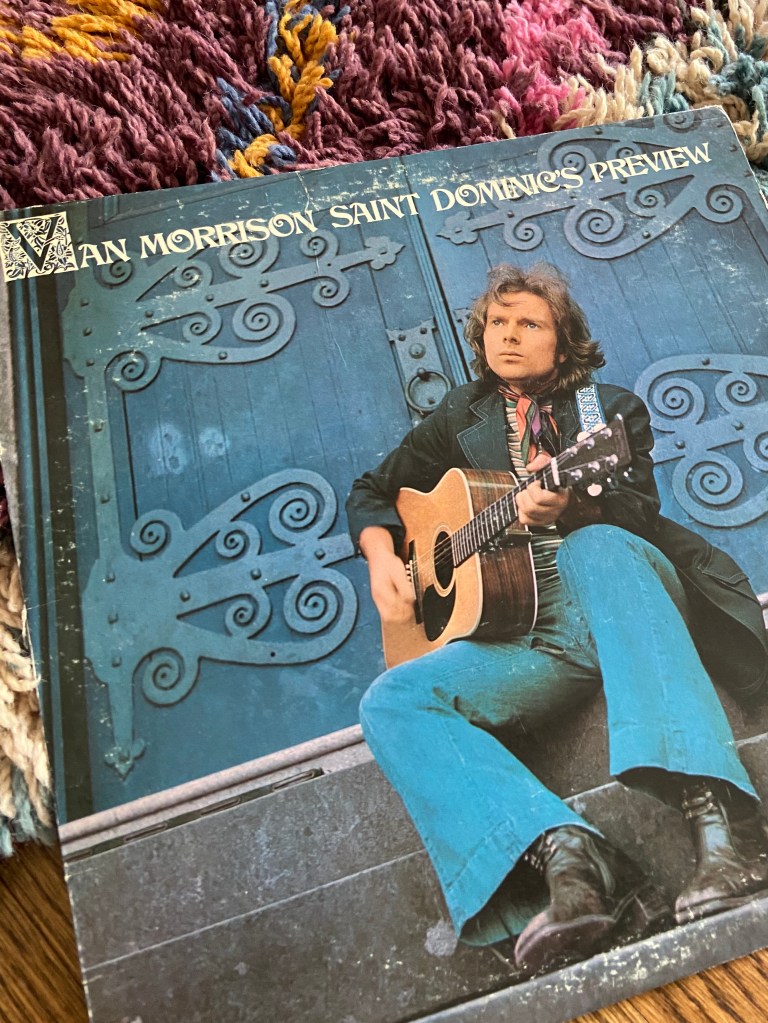
This is the album that got me through yesterday, courtesy of my dad’s old record collection. You would think that, having survived a year of something akin to self-quarantining during my recent cancer treatment, I’d be primed for this new normal. I’m not. A curious corollary of acute illness is the myopic focus it induces (something I wrote about in a previous post), but the current COVID-19 crisis has resulted in pain and anxiety that feel much more diffuse. I’ve wanted to write here again in an attempt to manage it, but finding the time, space, and energy has proven difficult while working and parenting from home. Here’s hoping that might change.

Turn and face the strange…

A year out from my cancer diagnosis and a month out from my last scan, I still find myself trying to reconcile how I thought I would be feeling now with how I am. The following is excerpted from a journal I keep more or less sporadically:

The depression I was feeling a week or so ago now appears to have morphed into anxiety. It hits me when I arrive at work in the mornings–really, whenever I leave my daughter and husband. […] The news I follow (both local and national) every day is no help. I’m anxious about the rise of white supremacy, coronavirus, fires in Australia, the fact that the common flu killed an otherwise healthy thirty-five-year-old man… If I list them all here, will my worries go away?

I guess it’s part of post-cancer existence, this knowing in one’s bones–no longer just one’s head–that life is both fleeting and finite. Like those coins in the Borges story, this knowledge is so heavy induces a kind of paralysis; I don’t want to go anywhere, do anything, take risks. Which is not where I was a few months into my recovery after treatment. Then, I felt uninhibited and impulsive, like I wanted to grab life by the horns and wrestle it to the ground, or ride it over a cliff. I contemplated things like dyeing my hair (which I did), and getting a tattoo (which I didn’t). I felt hungry for new experiences, for higher frequencies of feeling that now terrify me. Who was that person, born again and almost feral at forty? It’s decidedly not who I am this morning. 

I share this because I thought perhaps readers in a similar boat could relate.

We’re not always wearing war paint

sometimes my body reminds me
that I am in it

the walls of your veins are thick
she says with annoyance

shouldn’t they be? I think with the same
the nurse is nonetheless kind (if also
impatient)

I recline in the chair, my head turned away
from the tourniquets and needles
and weep

which happens almost involuntarily now
whenever I am back where it all began
a year ago or so

as though in this position, passive and supine,
when things are being done to me
I finally have permission (or maybe it’s
privacy) to feel

everything I wouldn’t let myself
before
or
in-between

Birthday Greetings

Yesterday I turned 40. Cancer has changed my relationship to many things, time being first and foremost among them. I welcomed this birthday with elation, despite the fact that this particular age is dreaded by many. There’s no shortage of over-the-hill/you’re now officially OLD cards and other doomsday paraphernalia out there heralding one’s transition into a new decade (be it 30, 40, 50, or beyond), and I know, from observing those around me, that aging can be an especially fraught experience for women. There is so much cultural currency in youth and beauty–indeed, women often seem valued for these things, alone–that losing them is a terrifying prospect. But, after cancer, I can’t imagine begrudging a single birthday from here on out.

I covet all the years.

Brave New World

The other day, I attempted to log into a medical website to retrieve some lab results. I hadn’t been on the site in quite some time, so I found myself cycling through a number of usernames and passwords before I was finally prompted to answer the inevitable series of security questions. One being, “At which of the following addresses have you never lived?” I stared at the list of street names and numbers like a student taking a particularly vexing multiple choice test. Suddenly, my itinerant twenties flashed before my eyes, simultaneously vivid and vague. There were kitchens the size of closets; plaster walls I had illegally painted; the coin-operated washing machine in need of an exorcism; a back door that jammed every time I let my roommate’s dog out (god, how I hated living with that animal); the set of dishes I’d bought with my first live-in boyfriend; musty foyers and musical street sounds–all of these things conjured, in heady detail, by a simple list of names and numbers. And yet… Had I ever lived on Ramsay Ave., I wondered. If so, is it really possible to have forgotten such things already? My grasp of my own history felt suddenly tenuous. Where did LabCorp get this information, all of which pertained to years long before I’d become a patient in its system? More disturbingly, why did it seem to recall what I could not? I sensed a strange transfer of authority at work in all this, from myself as the repository of my own life and history to this other interface–an interface we now associate with untold hoards of data and memory, like some medieval dragon jealously guarding its treasure. I continued to mull over these questions after I’d finally accessed my results (which, thankfully, were normal, but unrelated to my cancer), before arriving at a different one: Is it a gift to have lived long enough to forget these things–namely, where one lived, and when, and with whom? Is it not a sign of life’s marvelous density, and/or of forgetting as a kind of mercy? I’m not sure such questions would have occurred to me before this past year–before cancer.

A few days later, I found myself reading The New Yorker on my phone, and was stopped in my tracks (or, rather, scroll) by an ad that had popped up mid-article. Usually, I find these noisome and utterly off-base (I’ve never been in the market for a neon hunting vest), but this one hit eerily close to home. It was an ad for wigs. I caught my breath. Again, I found myself wondering, what does the The New Yorker’s algorithm know that I don’t? Can my phone sniff out cancer like those specially trained dogs? Is this ad somehow prescient–is chemo in my near future? It took a while to walk myself back from the ledge of panic that this hardly innocuous little plug induced. I reminded myself that I frequently access this blog on my phone–in addition to searching for information about my particular kind of cancer–so it’s not altogether improbable that I would be targeted for such ads by marketers. And, of course, I’ve heard the stories of women who’ve received ads for maternity products before they’d even told family and friends they were pregnant. But that doesn’t change the eeriness of the experience. It dislodges one, somehow, from the locus of the self, and suggests that the self is, perhaps, a scattered collection of loci, to which many lay claim (LabCorp and Best Wig Outlet, apparently, among them). There is the me who has cancer now, just as there is the me who lived on NW 23rd St., years ago, cancer-free. The desire for some kind of cohesiveness, in the face of such fracturing, makes sense and has only grown stronger (in me, anyway).

Things you have to learn after cancer…

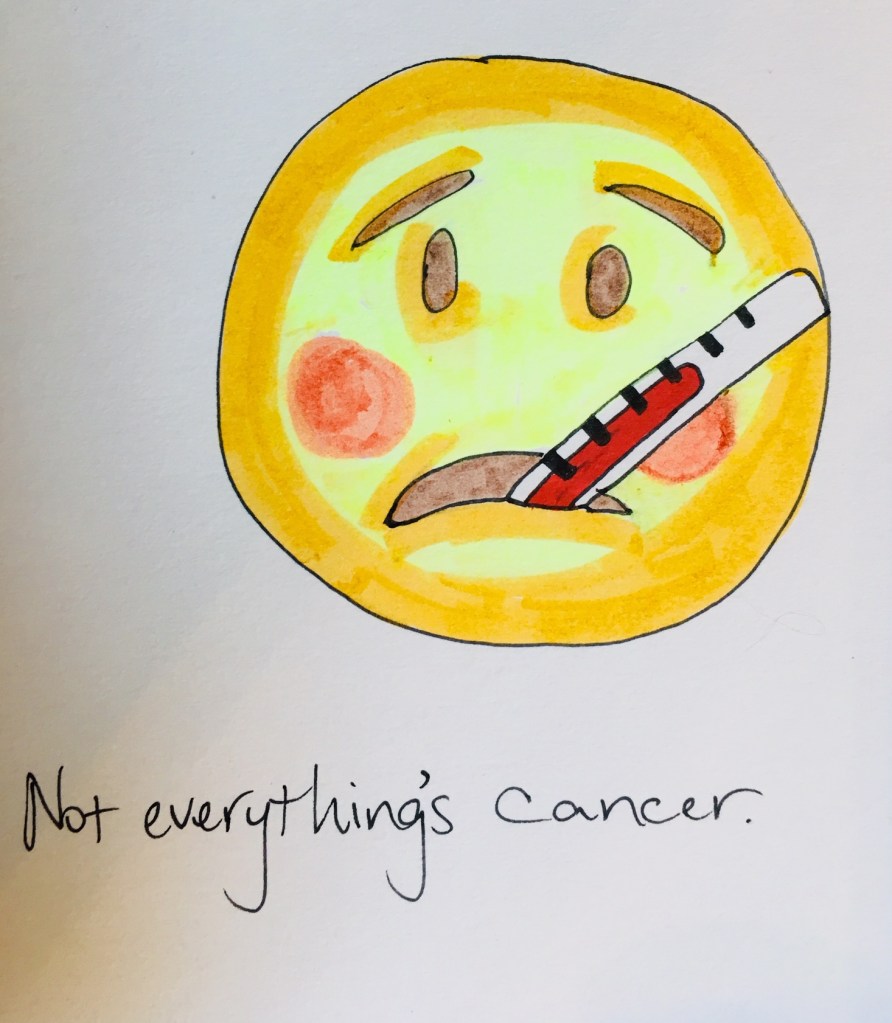
Now that school and fall are in full swing, I’ve had my first bouts of a cold, cough, etc. Last week, I also experienced some excruciating lower back pain. After consulting with my general practitioner, we concluded that I’d probably strained a muscle while exercising but, initially, I was convinced that I’d developed a tumor. Yep, I thought my cancer had metastasized, overnight, into my lower back. While not everyone who has received an unexpected cancer diagnosis necessarily thinks this way (i.e. in paranoid extremes), my guess is that some of us do. And part of the process of healing after treatment, at least for me, means not jumping to the worst possible conclusion each time some new symptom pops up. I don’t know why it never occurred to me before, but, in the next five years as I’m working toward remission, of course I’m going to get sick. And those (hopefully, minor) illnesses will likely be unrelated to my cancer. This is just something I’ll have to be mindful of moving forward, so I thought I’d note it here.

Cancer’s weird consolations

This evening, I got my first haircut since February. My hair is fine and grows slowly, so I don’t get it cut that often. The last time I went to the same salon, I took off several inches in preparation for my surgery. My doctor told me that I wouldn’t be able to shower or get my incision wet for a few weeks afterwards, so I wanted something simple and low-maintenance. Tonight, I stared at the person looking back at me in the large mirror, strangely skeptical that it was the same one who sat in the same chair seven months ago. It’s funny how we can meet ourselves again and again in life. After certain things, in anticipation of others… The face in the mirror looked a little different, but what I felt was uncannily the same: fear.

It rises in me at regular intervals now, then recedes, like a tide. My first CT scan last Friday went surprisingly well until it didn’t. The nurse who stuck me for the contrast dye IV was incredibly kind and reassuring. She found my vein on the first try and, because it was only a scan of my head and neck, I didn’t have to drink that awful barium sulfate solution. My time in the machine only lasted about seven minutes, and my mantra had been well-rehearsed. Two hours later, my husband and I were back in the surgical oncologist’s office to go over the results. The nurse practitioner who met with us said that she’d looked over the images and didn’t see anything concerning. “We’re still waiting for the radiologist’s final report,” she explained, “but I think you should be good to come back in six months for your next scan.”

I felt profoundly relieved and dove into the pleasures of a three day weekend headfirst. Then, on Tuesday afternoon, I received the official report from the radiologist via my patient portal. Apparently, there was something concerning. An irregular lymph node in my neck that will need to be more closely monitored. I have to go back for yet another CT scan in three months instead of six.

This news settled hard, to the extent that it settled at all. I asked my doctor for more information; she responded that it is possible I just have an oddly shaped lymph node and, if there are no changes to it in three months, we can assume things are fine. But I’m still reeling from the last time I thought things were fine, and then they weren’t. I suppose this is the new normal, but damn, do I miss the old one.

As I’ve tried to wrap my head around this latest uncertainty–as I’ve moved through a range of emotions from shock to fear to rage to even, at times, forgetting–the consolation that has come to me is an odd one (unless, that is, you have cancer, or something like it). When I began worrying how I would get through the next three months of life and work without letting my pending scan–much less, what might be happening inside my body–weigh so heavily upon me that I might not be able to function, or when I felt sheer anger that I couldn’t have a measly six months out from under cancer’s shadow, I suddenly wondered why I was assuming I had those three months until my next scan at all. To most, this would seem an incredibly morbid thought, but, to me, it was a comfort. I don’t really know how to explain it, but when I first received my diagnosis (and little other information), and feared I might be dying as I drove home from having my blood drawn that day, it occurred to me that I could also die in a car accident at any time. And this offered the strangest sense of relief. I guess simply realizing that I still didn’t know, that all was as uncertain as it had ever been, created some space for hope. Which, though small, is where I’m trying to live for the better part of each day.

The postmodern poetry of pathology reports

For a time now, I’ve been able to put cancer behind me. I’m doing–and thinking about–other things. But this Friday, I have my first post-treatment CT scan, and it’s looming large on the horizon. I keep rehearsing the afternoon’s appointment in my head by recalling how things went down the first time. Drinking that awful barium sulfate solution, alone, in a freezing cold room; the brisk manner of nurses and lab techs; lying on yet another narrow table; feeling the contrast dye saturate my veins; repeating the mantra I said to myself, before, as the machine pivoted around me: My body is a dark city, my body is a dark city. Like London during the blackouts of WWII, I don’t want it to light up. (Obviously, my understanding of how these things work is vague, but I believe the radiologists are looking for some kind of “activity”–for cancer cells to react to the chemicals coursing through my body by luminescing.)

For some reason, my mind also keeps going back to my initial pathology report. I don’t know why doctors give these to patients; mine consisted of a dense paragraph of medical jargon followed by this stand-alone sentence, in all caps:

THE LESION IS MALIGNANT.

Reading it felt like the closest I might ever come to visiting an oracle. But what seemed, at the time, like a fixed decree–an intractable fate–has since revealed itself to be a bit more pliant. Much can still be done in the wake of such things; choices can still be made. Which may be why I’ve been questioning some of my own lately. Small ones, like becoming irritated in traffic, or with the endless stream of students filing into my classroom to borrow my stapler this morning. Do I, alone, have the earth’s last functioning stapler, I wondered. And then I took a deep breath, a proverbial step back. I do a lot of that now. Trying to notice how I’m responding to certain things and why. Trying to hold onto the perspective that the past nine months has brought, though it was dearly purchased (does perspective ever come cheaply?). Is this worth the worry or frustration it’s causing me? Can I let it go? We all have so many heavy things to carry. Friday’s appointment is one of mine.