
Clear scan, full heart, can’t lose. Feeling profound relief today.
We’re not always wearing war paint
sometimes my body reminds me
that I am in it
the walls of your veins are thick
she says with annoyance
shouldn’t they be? I think with the same
the nurse is nonetheless kind (if also
impatient)
I recline in the chair, my head turned away
from the tourniquets and needles
and weep
which happens almost involuntarily now
whenever I am back where it all began
a year ago or so
as though in this position, passive and supine,
when things are being done to me
I finally have permission (or maybe it’s
privacy) to feel
everything I wouldn’t let myself
before
or
in-between
Brave New World
The other day, I attempted to log into a medical website to retrieve some lab results. I hadn’t been on the site in quite some time, so I found myself cycling through a number of usernames and passwords before I was finally prompted to answer the inevitable series of security questions. One being, “At which of the following addresses have you never lived?” I stared at the list of street names and numbers like a student taking a particularly vexing multiple choice test. Suddenly, my itinerant twenties flashed before my eyes, simultaneously vivid and vague. There were kitchens the size of closets; plaster walls I had illegally painted; the coin-operated washing machine in need of an exorcism; a back door that jammed every time I let my roommate’s dog out (god, how I hated living with that animal); the set of dishes I’d bought with my first live-in boyfriend; musty foyers and musical street sounds–all of these things conjured, in heady detail, by a simple list of names and numbers. And yet… Had I ever lived on Ramsay Ave., I wondered. If so, is it really possible to have forgotten such things already? My grasp of my own history felt suddenly tenuous. Where did LabCorp get this information, all of which pertained to years long before I’d become a patient in its system? More disturbingly, why did it seem to recall what I could not? I sensed a strange transfer of authority at work in all this, from myself as the repository of my own life and history to this other interface–an interface we now associate with untold hoards of data and memory, like some medieval dragon jealously guarding its treasure. I continued to mull over these questions after I’d finally accessed my results (which, thankfully, were normal, but unrelated to my cancer), before arriving at a different one: Is it a gift to have lived long enough to forget these things–namely, where one lived, and when, and with whom? Is it not a sign of life’s marvelous density, and/or of forgetting as a kind of mercy? I’m not sure such questions would have occurred to me before this past year–before cancer.
A few days later, I found myself reading The New Yorker on my phone, and was stopped in my tracks (or, rather, scroll) by an ad that had popped up mid-article. Usually, I find these noisome and utterly off-base (I’ve never been in the market for a neon hunting vest), but this one hit eerily close to home. It was an ad for wigs. I caught my breath. Again, I found myself wondering, what does the The New Yorker’s algorithm know that I don’t? Can my phone sniff out cancer like those specially trained dogs? Is this ad somehow prescient–is chemo in my near future? It took a while to walk myself back from the ledge of panic that this hardly innocuous little plug induced. I reminded myself that I frequently access this blog on my phone–in addition to searching for information about my particular kind of cancer–so it’s not altogether improbable that I would be targeted for such ads by marketers. And, of course, I’ve heard the stories of women who’ve received ads for maternity products before they’d even told family and friends they were pregnant. But that doesn’t change the eeriness of the experience. It dislodges one, somehow, from the locus of the self, and suggests that the self is, perhaps, a scattered collection of loci, to which many lay claim (LabCorp and Best Wig Outlet, apparently, among them). There is the me who has cancer now, just as there is the me who lived on NW 23rd St., years ago, cancer-free. The desire for some kind of cohesiveness, in the face of such fracturing, makes sense and has only grown stronger (in me, anyway).
Things you have to learn after cancer…
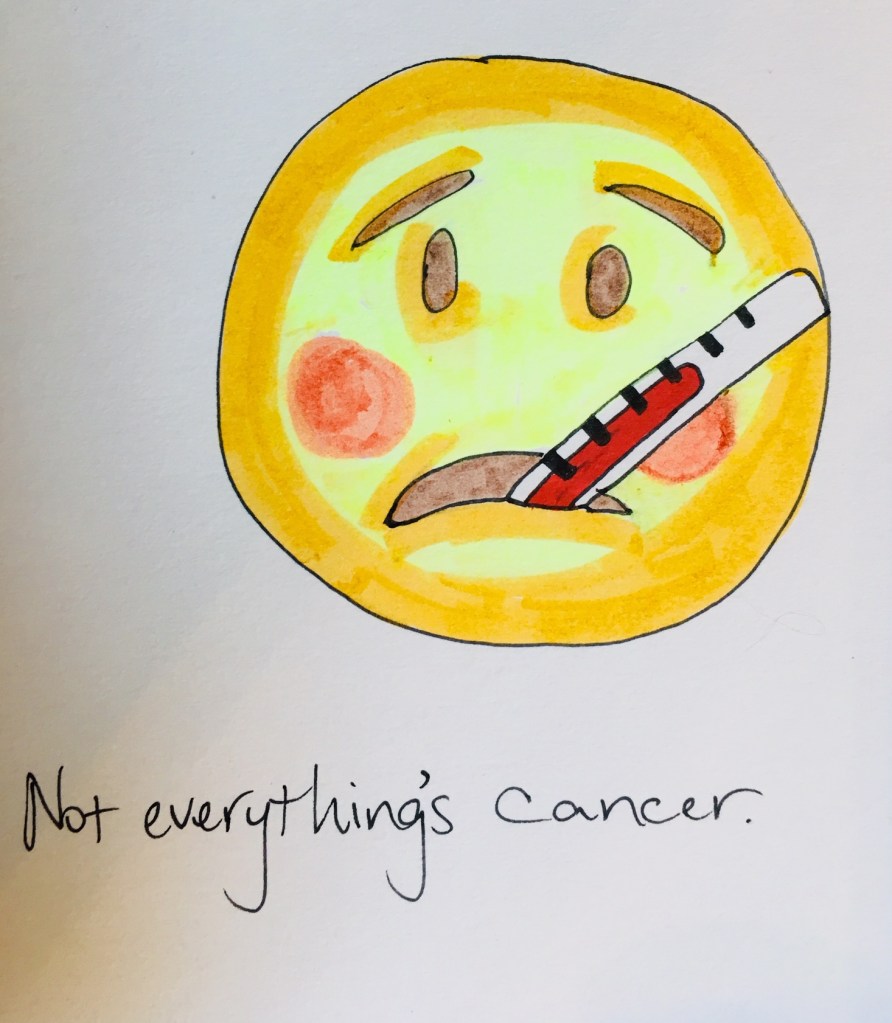
Now that school and fall are in full swing, I’ve had my first bouts of a cold, cough, etc. Last week, I also experienced some excruciating lower back pain. After consulting with my general practitioner, we concluded that I’d probably strained a muscle while exercising but, initially, I was convinced that I’d developed a tumor. Yep, I thought my cancer had metastasized, overnight, into my lower back. While not everyone who has received an unexpected cancer diagnosis necessarily thinks this way (i.e. in paranoid extremes), my guess is that some of us do. And part of the process of healing after treatment, at least for me, means not jumping to the worst possible conclusion each time some new symptom pops up. I don’t know why it never occurred to me before, but, in the next five years as I’m working toward remission, of course I’m going to get sick. And those (hopefully, minor) illnesses will likely be unrelated to my cancer. This is just something I’ll have to be mindful of moving forward, so I thought I’d note it here.
Cancer’s weird consolations
This evening, I got my first haircut since February. My hair is fine and grows slowly, so I don’t get it cut that often. The last time I went to the same salon, I took off several inches in preparation for my surgery. My doctor told me that I wouldn’t be able to shower or get my incision wet for a few weeks afterwards, so I wanted something simple and low-maintenance. Tonight, I stared at the person looking back at me in the large mirror, strangely skeptical that it was the same one who sat in the same chair seven months ago. It’s funny how we can meet ourselves again and again in life. After certain things, in anticipation of others… The face in the mirror looked a little different, but what I felt was uncannily the same: fear.
It rises in me at regular intervals now, then recedes, like a tide. My first CT scan last Friday went surprisingly well until it didn’t. The nurse who stuck me for the contrast dye IV was incredibly kind and reassuring. She found my vein on the first try and, because it was only a scan of my head and neck, I didn’t have to drink that awful barium sulfate solution. My time in the machine only lasted about seven minutes, and my mantra had been well-rehearsed. Two hours later, my husband and I were back in the surgical oncologist’s office to go over the results. The nurse practitioner who met with us said that she’d looked over the images and didn’t see anything concerning. “We’re still waiting for the radiologist’s final report,” she explained, “but I think you should be good to come back in six months for your next scan.”
I felt profoundly relieved and dove into the pleasures of a three day weekend headfirst. Then, on Tuesday afternoon, I received the official report from the radiologist via my patient portal. Apparently, there was something concerning. An irregular lymph node in my neck that will need to be more closely monitored. I have to go back for yet another CT scan in three months instead of six.
This news settled hard, to the extent that it settled at all. I asked my doctor for more information; she responded that it is possible I just have an oddly shaped lymph node and, if there are no changes to it in three months, we can assume things are fine. But I’m still reeling from the last time I thought things were fine, and then they weren’t. I suppose this is the new normal, but damn, do I miss the old one.
As I’ve tried to wrap my head around this latest uncertainty–as I’ve moved through a range of emotions from shock to fear to rage to even, at times, forgetting–the consolation that has come to me is an odd one (unless, that is, you have cancer, or something like it). When I began worrying how I would get through the next three months of life and work without letting my pending scan–much less, what might be happening inside my body–weigh so heavily upon me that I might not be able to function, or when I felt sheer anger that I couldn’t have a measly six months out from under cancer’s shadow, I suddenly wondered why I was assuming I had those three months until my next scan at all. To most, this would seem an incredibly morbid thought, but, to me, it was a comfort. I don’t really know how to explain it, but when I first received my diagnosis (and little other information), and feared I might be dying as I drove home from having my blood drawn that day, it occurred to me that I could also die in a car accident at any time. And this offered the strangest sense of relief. I guess simply realizing that I still didn’t know, that all was as uncertain as it had ever been, created some space for hope. Which, though small, is where I’m trying to live for the better part of each day.
A new cartoon series, cont’d…
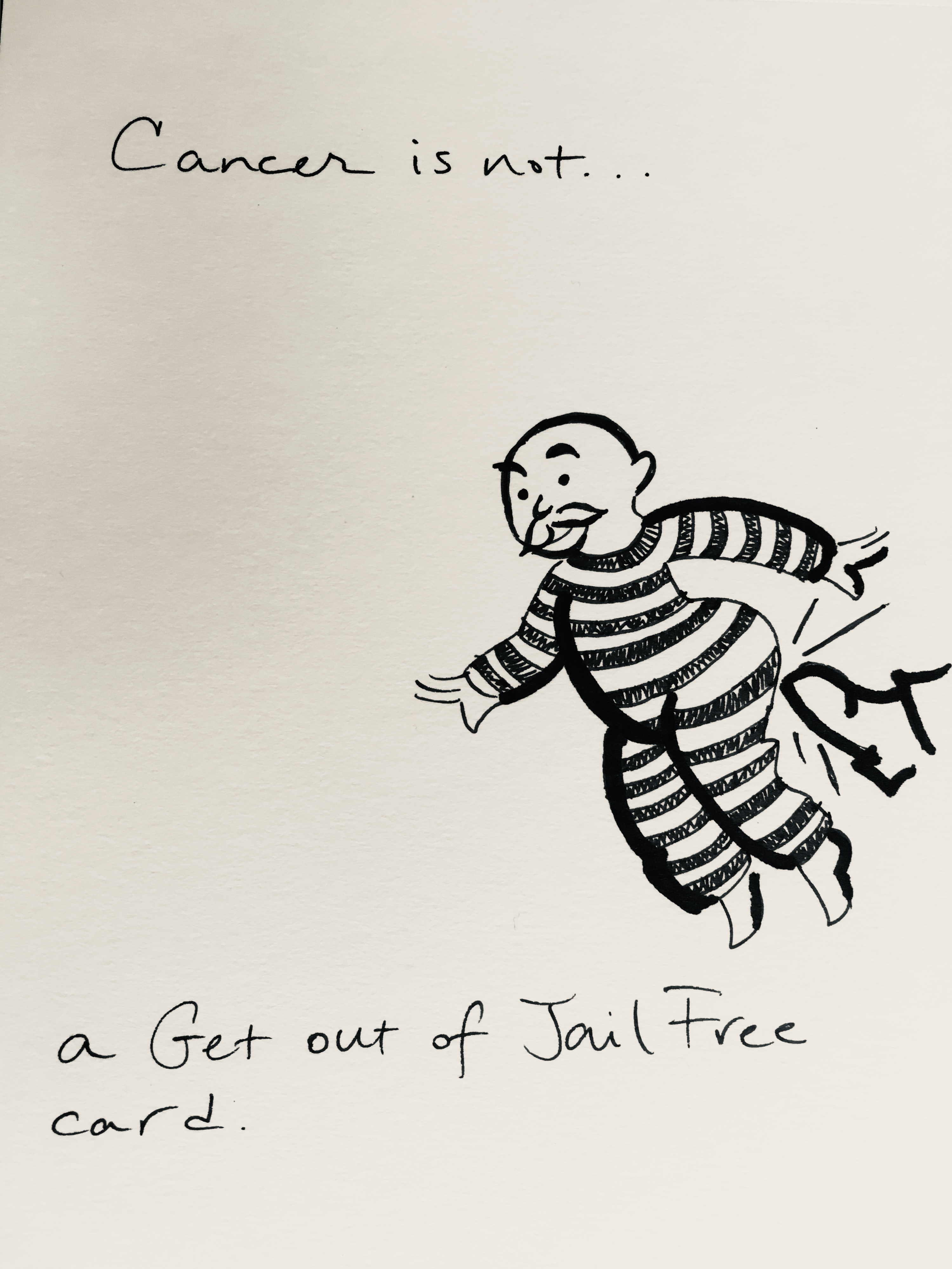
I drew this cartoon in the thick of my treatment on a particularly rough day. As I recall, I got a flat tire on the way home from radiation, my daughter was being a total pain in the neck, and the cat had vomited all over the rug when I finally made it back to the house. I remember thinking, incredulously, “Wait a minute… Other bad stuff can’t happen right now; I have cancer!” Turns out, it can–and does–happen.
Par example, last week I had planned a family beach trip to, in the words of my surgeon, “relax and enjoy the summer.” But the day before we were scheduled to leave, my husband stepped in a yellow jacket nest while doing yard-work and went into anaphylactic shock. He was rushed to the emergency room in an ambulance and spent the night in the hospital under close observation. It was awful. And, yet again, I was incredulous. Really, universe?!? Does our family not deserve some small reprieve after the world’s shittiest spring? But, as I should well know by now, it’s not really a question of “deserving.” These things are a matter of chance (hence the term, “misfortune”); as far as I can tell, human suffering is meted out unevenly and at random. And there are many people for whom it is much greater, or more dire. My husband is alright, we eventually made it to the beach, and some version of relaxation and enjoyment was had. It was not what I’d envisioned, initially, but we made do.
Sometimes, I taunt myself with the idea of someone out there in the world whose life is one of utter ease, without pain, conflict, illness, or injury, who just hums along without encountering unexpected obstacles, like a train on a greased track. I don’t actually know this person, most likely because she doesn’t exist. We also have a tendency to conceal our individual struggles, perhaps out of a sense of shame, which further promulgates that fantasy–the uninterrupted life of utter ease (or, if it’s more your thing, astounding productivity). Either way, I thought I’d share our recent mishap here to counteract that narrative–to remind myself that, even if it’s slow and squeaky, the train has not derailed. We keep chugging along, and I’m grateful for it .
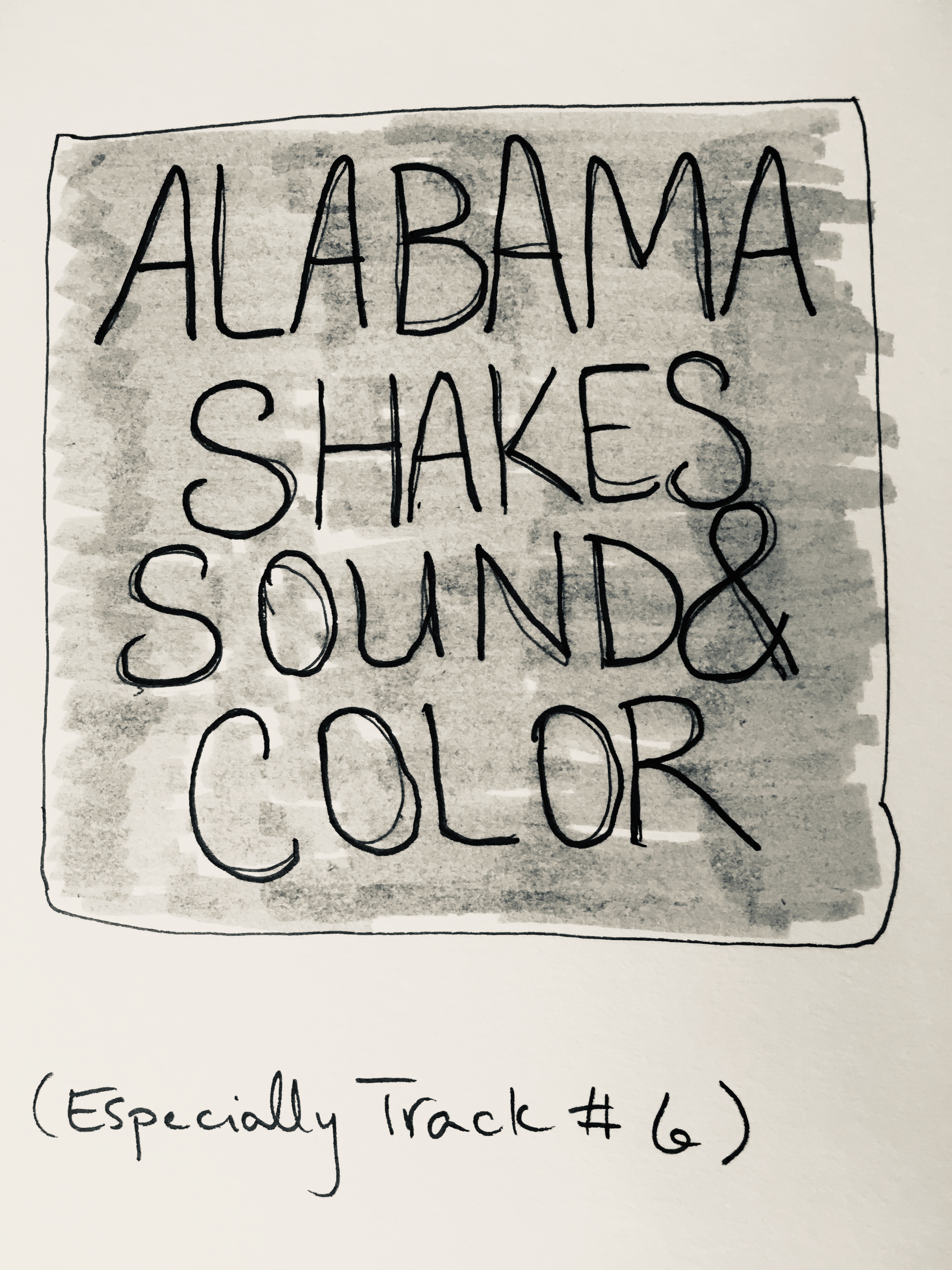
Soundtrack to my healing
It’s the strangest thing…
I’m now seven weeks out from radiation, and can happily report that much has improved. I can eat almost anything I like, with the exception of some meats. My energy is back, and I’m not in any physical pain. But emotionally, I’ve struggled. Life has felt oddly amorphous as I’ve healed. Rejoining the land of the living/well was more of a difficult transition than I thought it would be. Kind of like a war veteran readjusting to civilian life, but not. I miss being surrounded by others who are experiencing something similar to what I’m going through, or have gone through (i.e., the quiet confederacy of medical waiting rooms). I miss the myopic focus that illness induces–its consuming totality. I’ll even admit, with no small amount of shame and surprise, that I miss the attention that comes with it from everybody else. These are not things I anticipated feeling once I was on the other side of this. In fact, I naively thought that, if I was lucky enough to get to the other side of this, I would never have a bad day again. I would just feel so damn grateful to be alive, eating, and well, that there wouldn’t be room for any other emotions (particularly, negative ones).
But feelings, even gratitude, even joy, even (thank god) excruciating pain, move in and out like weather. And it has been this–the incessant changes to my body and outlook over the past six months–that has proven the most difficult to navigate. In December, I thought I might be dying. In May, I was granted a stay of execution. The time in-between was like nothing I’d experienced before. No wonder that, in returning to “normalcy”, I feel like a stranger, or interloper, in a place that was once quite familiar.
It’s hard for me to explain, but Katharine Smyth gets at this with astounding precision in her memoir, All the Lives We Ever Lived. Virginia Woolf, she writes, makes “a serious argument for how illness separates us from the healthy, whom she calls ‘the army of the upright’, and how, for the invalid, ‘the whole landscape of life lies remote and fair, like the shore seen from a ship far out at sea.’ […] It must be so difficult to bid farewell to one’s secret world of illness, and perhaps more difficult still to reclaim and trust in one’s new place among the living.” Indeed.
Radiation: 3 weeks out
Today marks three full weeks since I completed radiation. My doctors have said that recovery usually takes about six weeks, so I’m halfway there. The most marked change I’ve noticed is in my energy level. I now feel pretty much back to normal in that respect. I’ve resumed my walks, and feel comfortable being out and about. I think weaning off of my pain medications has helped me feel less fatigued and drowsy (not to mention, allowed me to drive again). Speaking at length is still difficult, which concerns me given the fact that I’m due back in the classroom in August. But hopefully, that will continue to improve, along with my enunciation.
The main side effect that remains unchanged is my diet. While the flavor of some foods is gradually returning, my ability to chew and swallow them has not. So I’m still on liquids. The same liquids. Like my surgeon and radiation oncologist predicted, I’ve lost twenty-two pounds since all this began. It’s actually becoming a concern, as an unexpected–but, oddly convenient–corollary of radiation is a loss of appetite. I don’t really feel hungry any more. Meals (and I use the term loosely) are something I make myself have; they’re not something I want. In a way, this is a bit of a blessing. It would be a torment to sit down with my family at dinner and find myself craving what they were eating, but I don’t. The challenge now is making sure I get enough calories to continue to heal and have energy given this odd indifference towards food.
And it is odd. For as long as I can remember, eating has always been associated with very strong emotions–desire, anticipation, pleasure, anxiety, satiety, belonging, frustration, disappointment, loneliness, discovery. It has never been a source of apathy. As with most things I’ve experienced since my diagnosis, this altered relationship to something so fundamental has been double-edged. On the one hand, it’s surprisingly freeing. I’m doing more with a lot less. There’s some time and psychological space that’s opened up where food used to be. I see that, perhaps, the ascetics were onto something. But I also mourn its loss, its familiarity, its rituals. Again, temporarily. I’ve been told that my appetite and ability to eat will return again at some point. I just don’t know when.
Healing is hard work
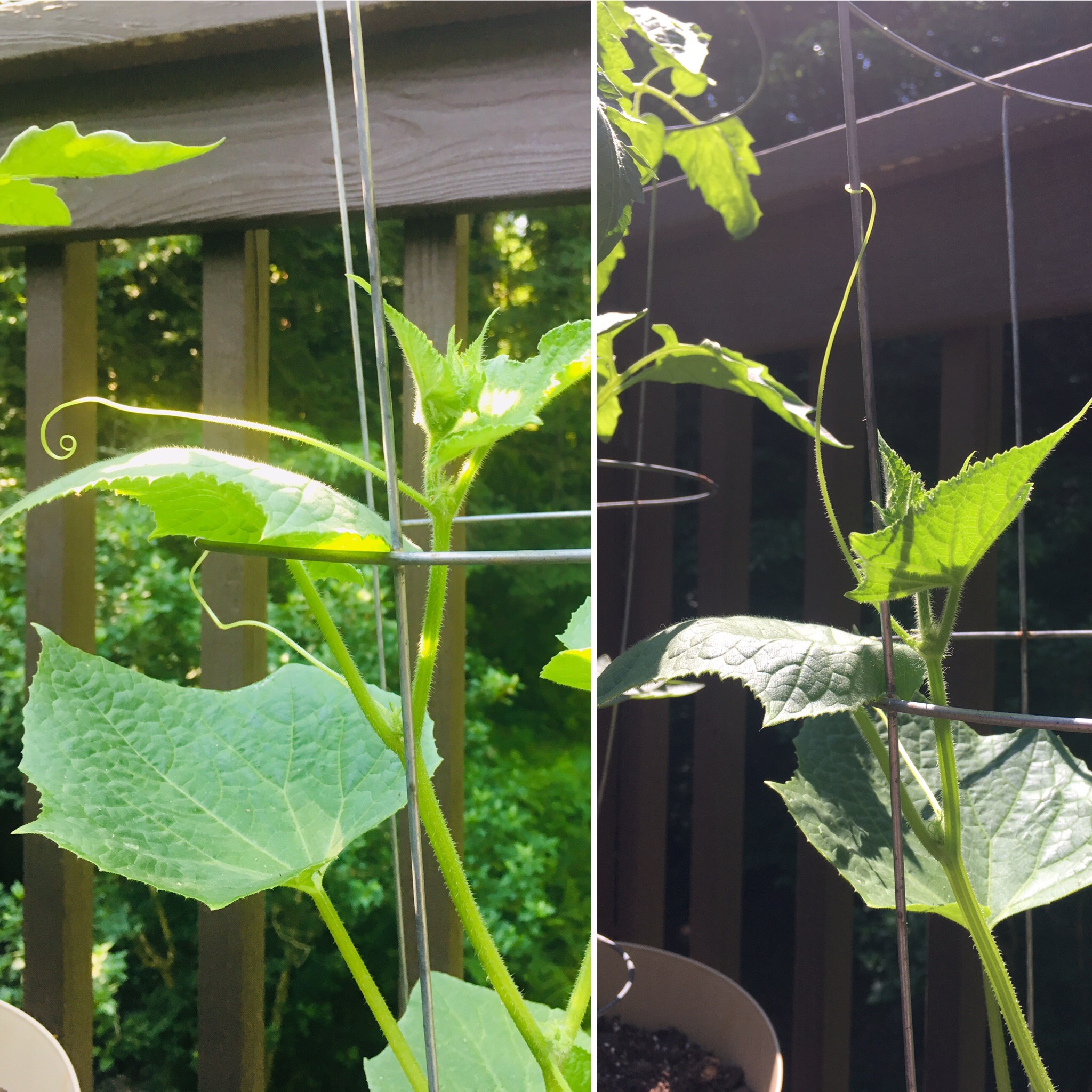
Consider the cucumber. We bought one at a plant sale my daughter’s school was having, and watching it grow has been fascinating. The students staffing the sale told us that cucumbers are climbing vines, and would need a trellis or cage to latch onto (if you’re an avid gardener, you already know this, but I’m a novice; I try to grow a few potted vegetables and herbs every summer, with varying degrees of success). We followed their instructions, and I was awed by the first little tendril that unfurled from the stem, delicately coiled as calligraphy. It listed far from the cage and I thought, there’s no way it will latch onto that! It seemed blind, like a worm or some deep sea creature, tonguing its way, vainly, into the air. But then, a day or so later, this tendril had somehow found the thin metal rib of the cage, and curled around it with such grace and precision that I felt oddly moved. That nature is ingenious and resourceful shouldn’t surprise me, but it did. It struck me as miraculous that this seemingly lost and fragile fledgling of a stem found what it needed in the night, even though it’s merely a rote machination of the plant–what it does, what it’s designed to do.
I’ve wondered if my body is functioning in a similar way. I wonder how much invisible work it does every night to heal and repair what has been ravaged. And I’ve wondered how it knows to do this, without any books, instruction, or bidding. I was in so much pain last week, and felt so vulnerable, that I couldn’t believe my doctors had sent me home to deal with it, alone. I don’t see my radiation oncologist again for six weeks. Six weeks! I would think to myself, enraged and incredulous that I’d been left to flounder through the hardest part of all this, unmonitored. But maybe it’s because there’s really nothing she could do for me, aside from prescribing the heavy regimen of pain meds. Maybe she knew that my body would begin to heal itself on its own, and my job now is to simply wait it out. Only it’s not so simple, because the process has been slow and strangely hidden from me. I wake each morning wondering how I will feel–whether the pain will have subsided some, or my energy returned. Whether my body, in its distress, will have found some kind of mooring.
 Well, then