You can ring my bell

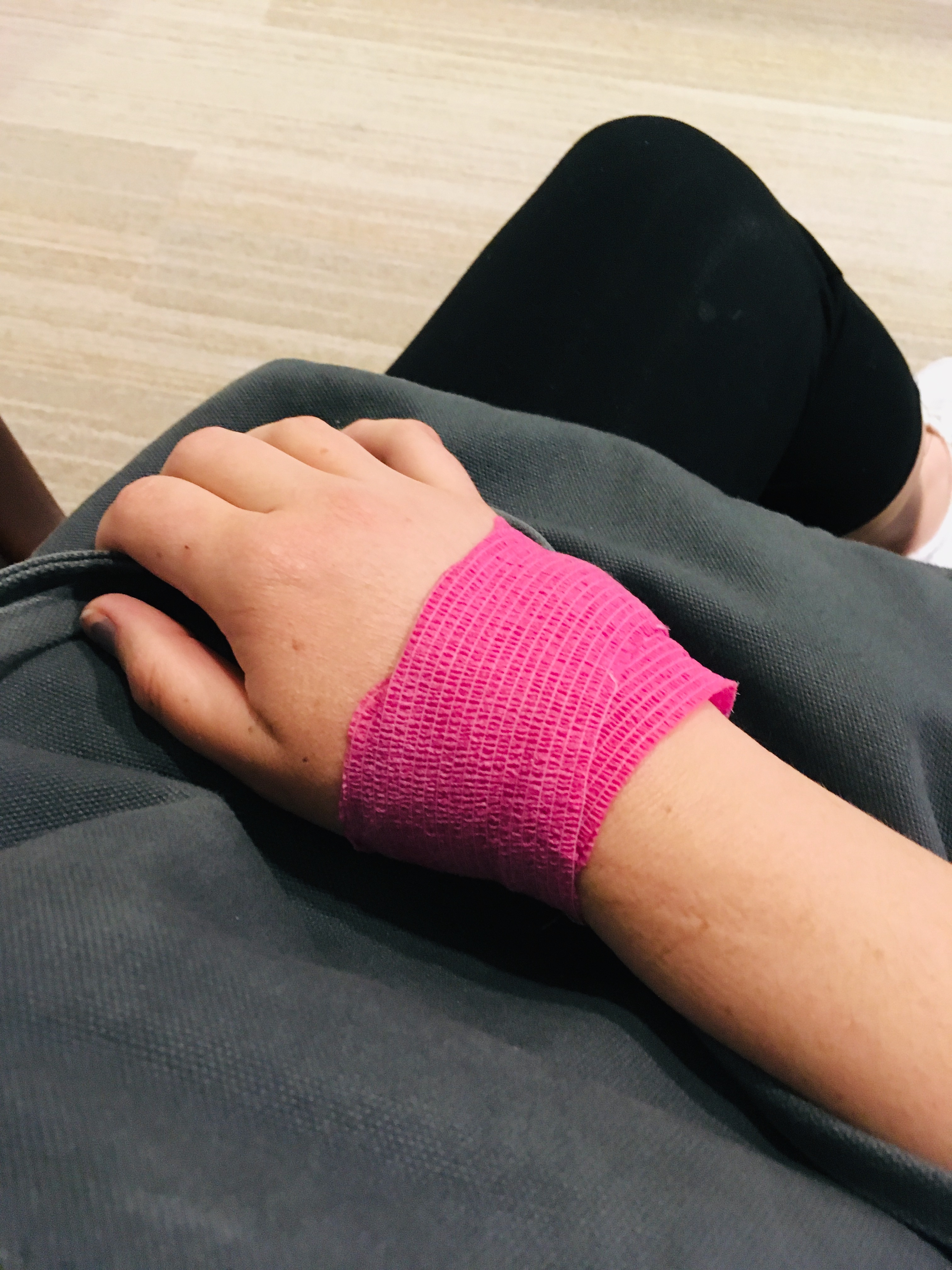
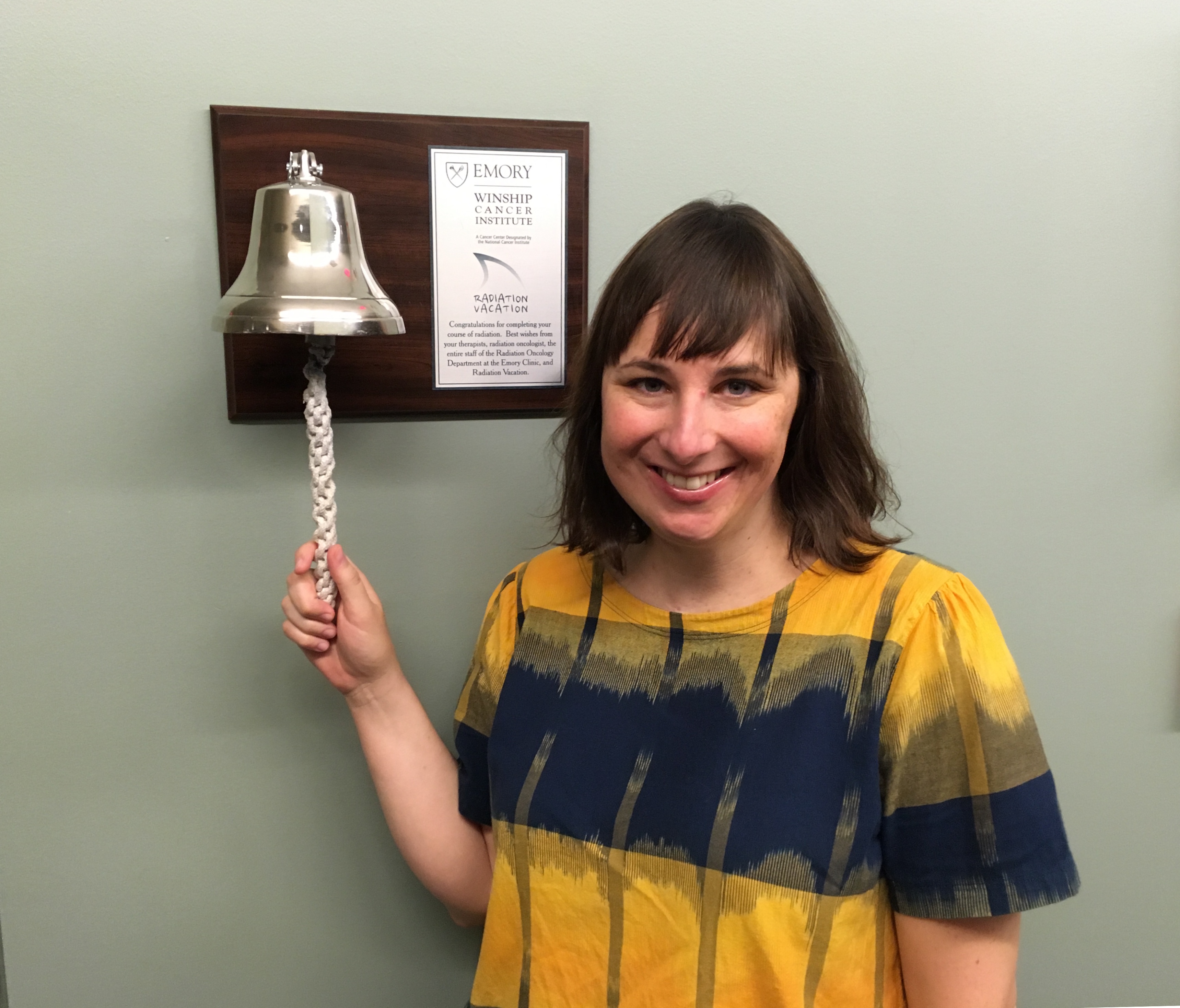
Yesterday, I reached a major–albeit, unsought and unwanted–milestone: my last radiation treatment. It was an emotional afternoon. Unlike Spider-Man, I chose not to take my mask home with me. But, like him and every other cancer patient treated at this center, I did ring the celebratory bell outside the waiting room when I finished. Everyone sitting nearby claps while the radiation techs and administrative staff sound noisemakers. I can’t believe I made it through the past six weeks (much less, the past five months since my diagnosis).

Several friends and family members have asked how I’ll be celebrating, and it’s frustrating to have to tell them that I’m not exactly out of the woods yet. My doctors warned me that I would probably feel the worst during the week following treatment and, so far, that’s been the case. My mouth is a swollen mess, my jaw aches, and painful new scar tissue has formed in my throat as a result of the radiation. I’ve been ordered to stay on the full (which is to say, maximum) dose of my various pain medications for the next ten days before I start to slowly wean off of them, one at a time. So a glass of champagne isn’t exactly in the cards for a while. To celebrate, I cried with my husband, came home, and took a nap.

Today, though, I feel slightly better than I did yesterday. I’m sure a large part of it is the sheer relief of knowing that this leg of the journey (which has been an arduous one) is behind me. I don’t have to go back to the hospital today at 3pm, as I have for so many miserable afternoons. I don’t have to go back tomorrow, either, or the day after that. When I think of this, it’s like taking a deep breath after holding it underwater, or under duress, for(seemingly)ever. But this is not the end. There are still follow-up appointments and scans and the attendant, agonizing period of waiting for their results before I’m officially in the clear. Remission–a word I once gave little thought to that now sounds so wonderful it has the ring of an incantation–is a long ways away. That said, I now also understand that the designation “survivor” is as much about surviving treatment–be it surgery, radiation, or chemotherapy–as it is the cancer, itself. And I survived this.
Happy Mother’s Day

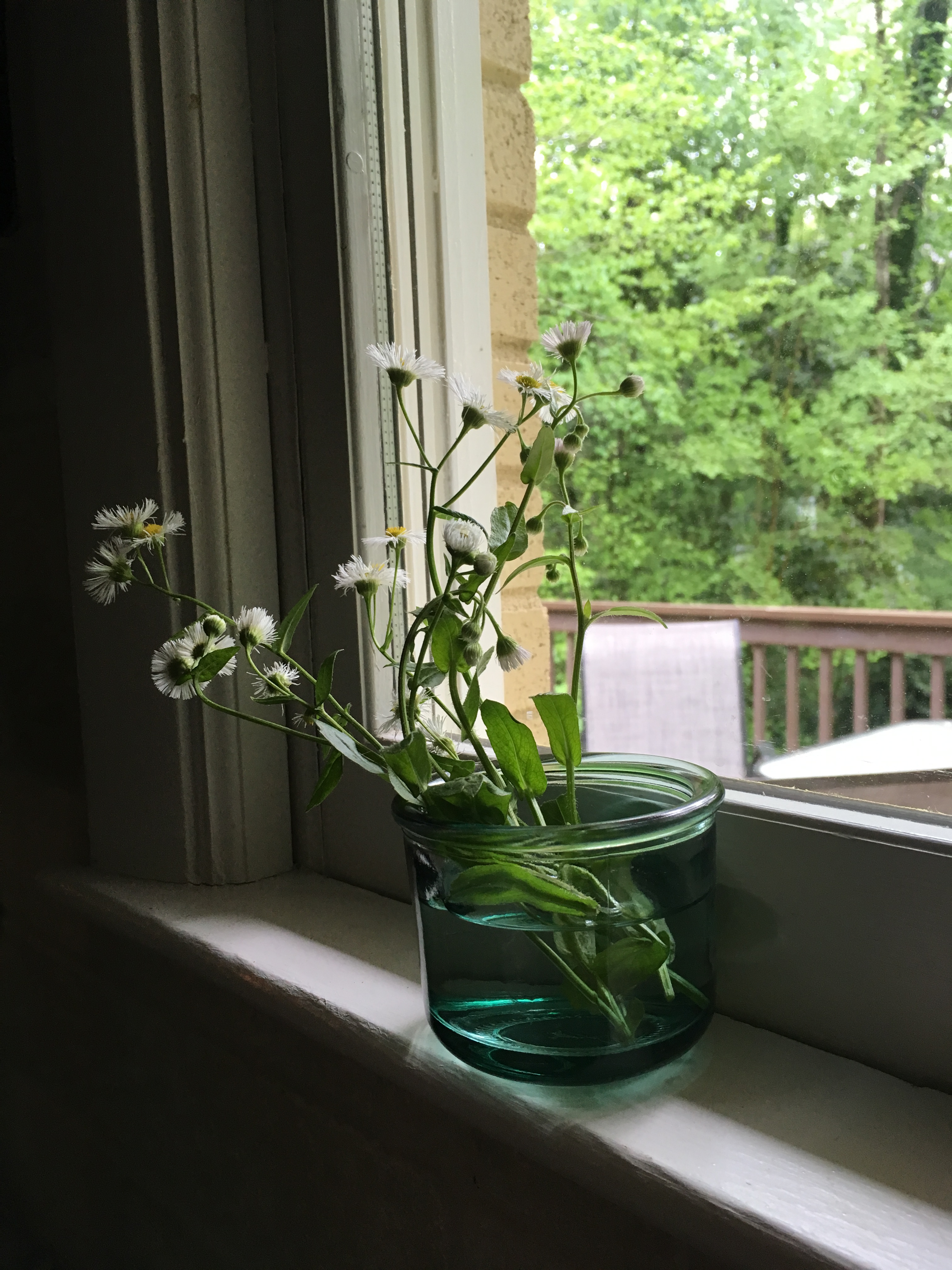
I’ve received many a beautiful bouquet since my diagnosis, but sometimes the best arrangements come from the grubby hands of your five-year-old and are harvested in your own backyard. I believe these are technically weeds, but they warmed my heart nonetheless. Some people have asked how my daughter has been handling my illness, and the answer I give them is, “fairly well.” That’s because she doesn’t have much of a frame of reference for it, despite a few children’s books we’ve read her on the subject. I think she understood that something serious was happening during and after my surgery, because I stayed in the hospital for a few days and was pretty laid up when I returned home. She kept a wide berth then, clearly weirded out by the bandages, stitches, and drain that hung from my neck. This was followed by a brief period, around her birthday, after I’d recovered from surgery and before radiation, when I felt like myself and could do the things with her that I normally do. But that time has since passed, and now I feel like lame, Sick Mom again.

I think the more complicated question that people haven’t asked is how I’m handling my illness as a parent. Like many mothers, I have high expectations for myself in this role. I want to be an active and involved part of my daughter’s life, and it kills me a little bit that I struggle even to read her a story right now (the sores in my mouth, along with its dryness, make speaking for any length of time painful and difficult). I don’t like that she sees me in pretty much the same position every day, which is resting on the couch. I don’t like that I’m often too tired to give her a bath, or walk with her while she rides her scooter. But these things, I must remember, are temporary, and there are all manner of parents in the world with their own limitations, physical or otherwise, who love their kids no less well for these. And, as long as kids feel that love, my sense is they’ll be just fine.

I’ll take what I can get

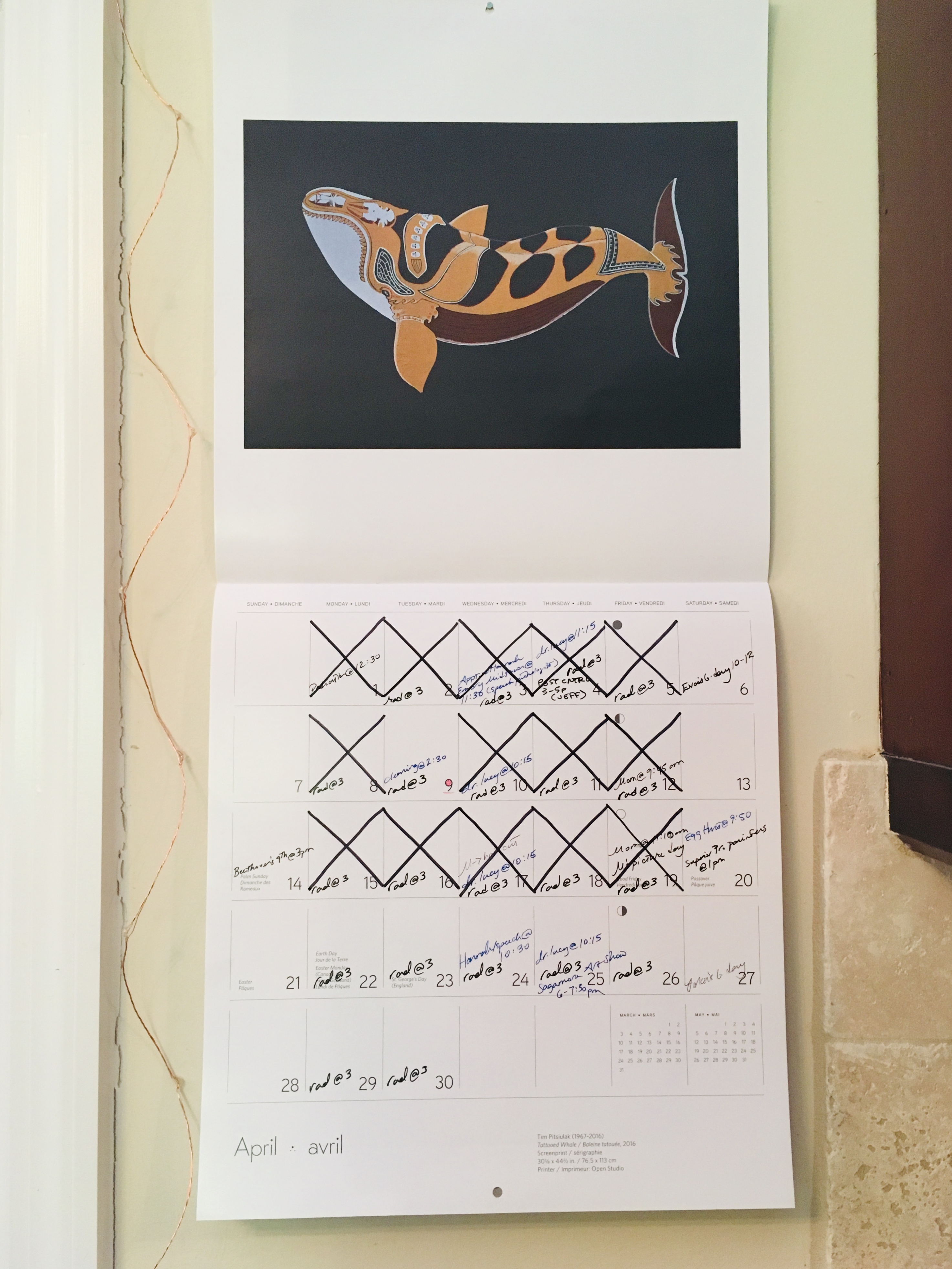
This probably gives you a good sense of where I’m at today. The hours pass at a snail’s pace, but I’m growing accustomed to this. Time is marked mostly by the dosing of different medications, in-between which I sleep or make myself drink something. Monday is a big day, however: my last radiation treatment!

The home stretch

Things really took a nosedive this week. When I saw my radiation oncologist after my treatment on Tuesday, she said it was time to pull out the big guns–namely, Oxycodone. “You want to stay ahead of the pain during these last two weeks,” she explained. I was wary, as I’d experienced some unpleasant side effects from opioids before (mostly severe nausea), but acquiesced. Then, like clockwork, after my second dose of Oxy yesterday, I felt immediately faint, feverish, and dizzy. I broke into a cold sweat and had to lie down on the couch. Dry heaves followed shortly thereafter (I don’t have a whole lot in my system these days).

Unfortunately, conditions did not improve. When I went to my radiation appointment in the afternoon, I looked and felt awful. My radiation tech noticed immediately, and said we’d go back to consult with the nurse after my treatment. She also acknowledged that I’ve been doing really great so far, commenting that many people look and feel the way I did much earlier in the course of their treatment. This was an odd consolation, but I was willing to take it. When we later met with the nurse, she confirmed that everything I was experiencing was pretty normal at this stage of the game, and was likely to get still worse (not exactly what you want to hear when you feel like you might pass out in your chair). She decided to schedule me for my first infusion, which was earlier today.

This ended up being the first time since my surgery that I’ve actually felt like a cancer patient (which is to say, weak, awful, and exhausted). The hospital’s “infusion center” is a startlingly crowded ward of little, curtained IV stations. I sat in my designated recliner, bracing myself for one of the things I’ve come to dread most: nurses trying to find a vein. I’ve inherited notoriously small, deep, hidden veins from my mother, and it’s always a challenge for someone drawing blood or sticking me for anything else to find them.

Apparently, the anxiety surrounding this relatively routine procedure, combined with my general fatigue and depletion from radiation, was enough to trigger my second episode of what I’ve now learned is an actual condition: Vasovagal syncope. As soon as the nurse inserted the IV (which she was able to do on the first try), I became faint, dizzy, and nauseous. I passed out briefly, and came back to with a violent fit of vomiting. This also happened a few months ago, when my surgeon was taking out the stitches in my neck. He thought I was having a minor seizure. Because I barfed all over the front of my own shirt, I had to throw it in the bio-waste bin and leave his office in an open-backed hospital gown and jeans. I received some strange looks in the elevator, and one guy even asked if I was making my escape.

Thankfully, that didn’t happen today (the barfing on my own shirt part, anyway). I did throw up, but the nurse had a bag at the ready when I told her I struggled with needles. She was patient and kind, which helped calm me considerably. I sat for an hour, getting a simple saline drip to replenish the fluids my body has steadily lost over the past few weeks. They also threw some morphine and Zofran into the mix, so I was like a groggy zombie by the time we left.

Now, several hours later and the afternoon’s radiation appointment behind me, I’m feeling *slightly* better. Baby steps, just like Bob.

Maybe I should just re-name my blog “I miss food”

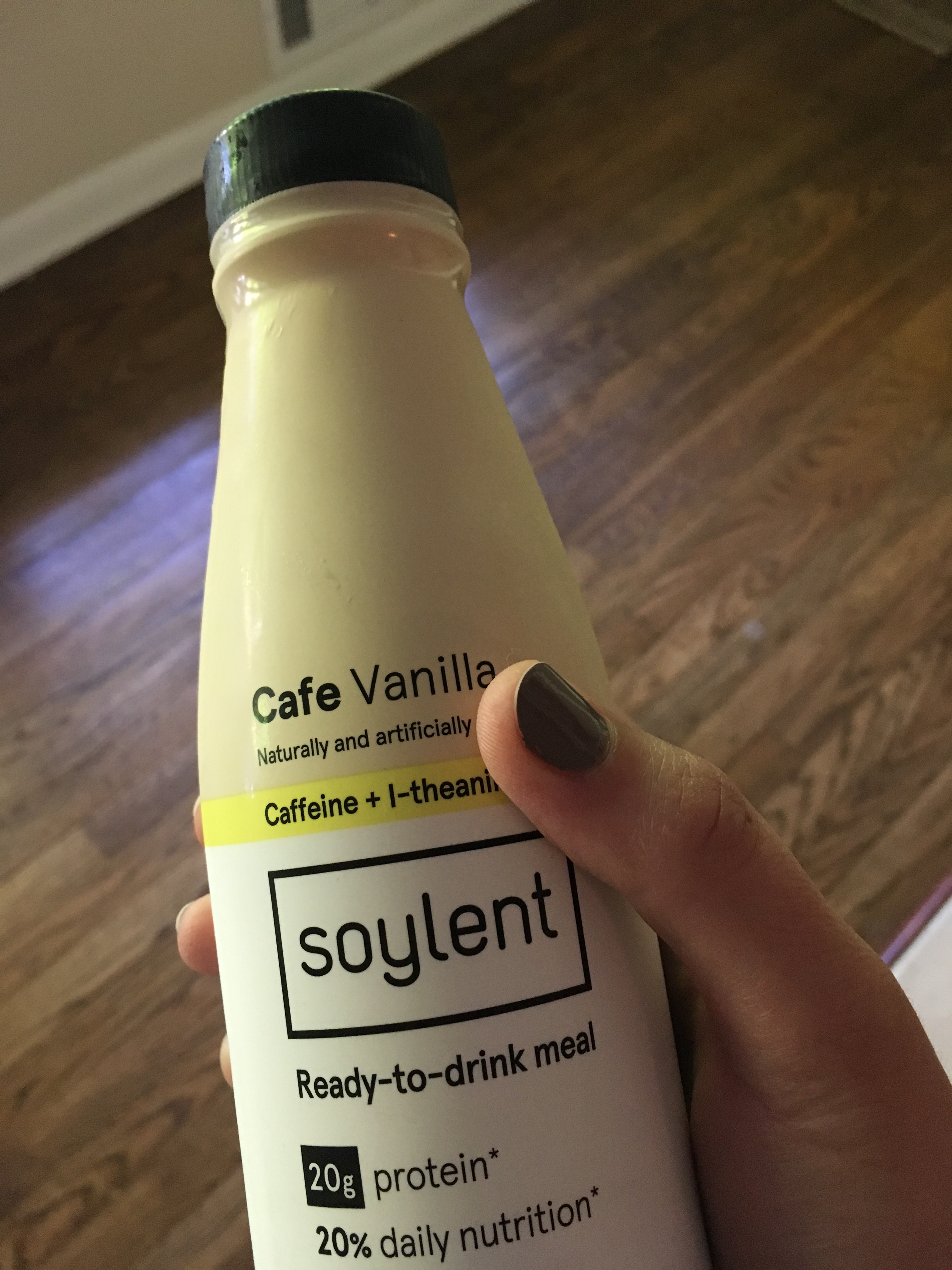
I’m becoming quite the connoisseur of protein drinks. Apparently, this is the beverage of choice for gamers and coders. I’d say it has less of a metallic finish than Ensure, with hints of isomaltulose and soy lecithtin. The bouquet is barfy. Needless to say, I haven’t taken a solid shit in days (gross, I know. If you’re looking for a non-gross blog on cancer’s ravaging of the body, let me know when you find it). On the upside, I have stopped biting my nails. It’s a nervous habit I developed when I was about 9 or 10, but surgery and radiation have made this nearly impossible. I wish quitting had taken less extreme measures–I remember my dad offering to pay me $1 for each nail I stopped biting when I was a kid ($10 was a lot back then!). Maybe I can collect on that offer now.

I miss food, cont’d.

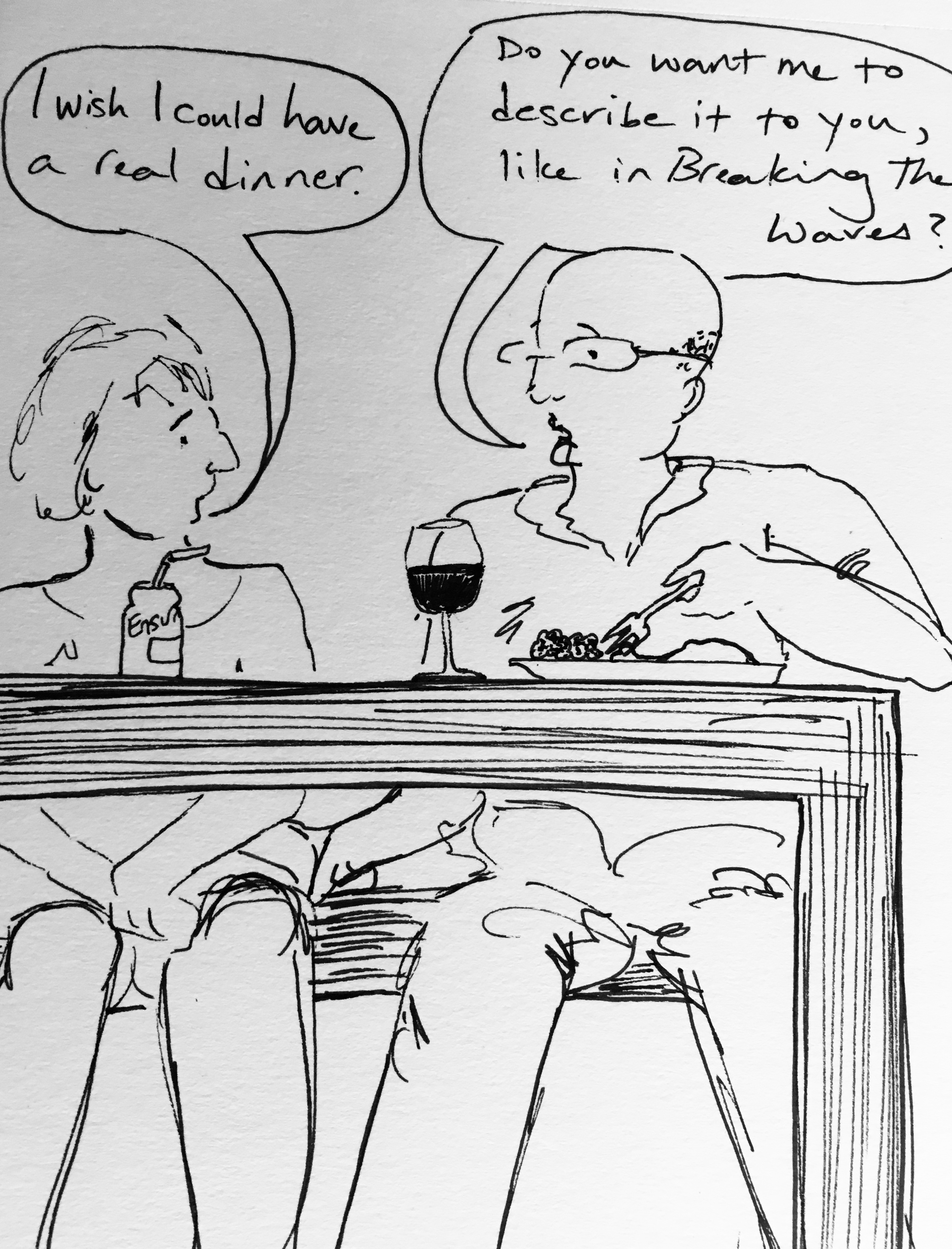
If you haven’t seen the deeply depressing film by Lars von Trier, then this cartoon won’t make much sense. But when my husband said this the other night at dinner, I laughed so hard it hurt.

Radiation: Halfway there

After today’s appointment, I will be halfway through my treatment. I should have been halfway through this past Friday, but a week ago, the server to the radiation machines was down, so they sent me home without treatment one afternoon. I remember this being a little alarming. My doctor assured me that it wouldn’t affect the outcome of my treatment in any way. “The server was down once before,” she said, visibly annoyed. “That was about five years ago.”

It’s strange to think that possibly everything we rely on is vulnerable to some kind of breakdown–even the most advanced technology, state of the art machines, our bodies, our minds… Confronting this truth is difficult and, no doubt, leaves us reaching for all manner of props and crutches that seem more secure, or for distractions that evade it altogether. What are these, for me? I don’t ask because I want to condemn them, but because I want to recognize them more clearly for what they are. My thought is that, in doing so, I might also be better able to recognize their converse–the ways in which I am whole and present and functional now, despite the cancer and the treatment and its side effects.

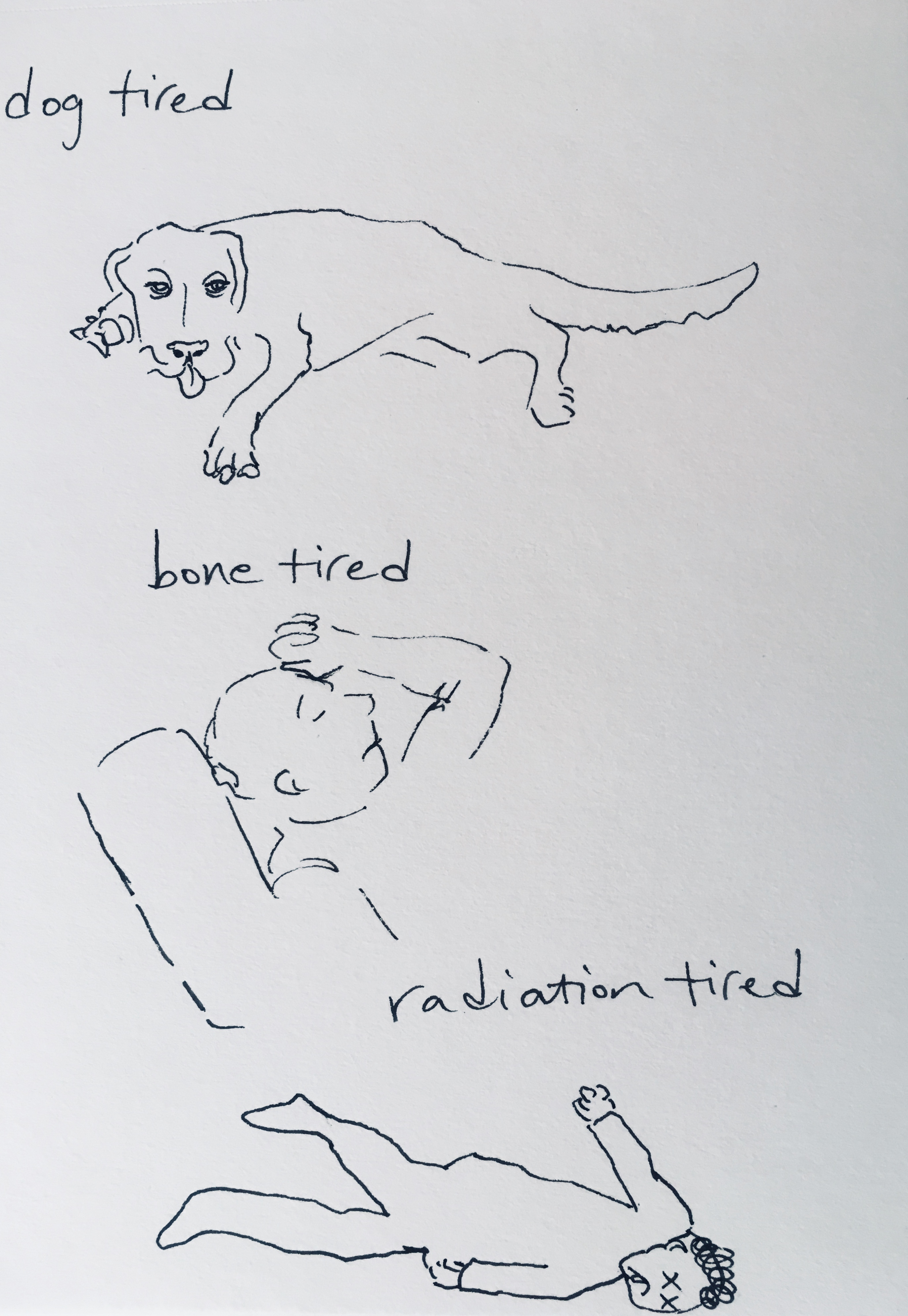
The other day, when the radiation tech (whom I’ve gotten to know and like a little better) asked how I was doing, I confessed that it was getting harder–that I was in more pain than I had been before. She responded that this was a particularly tough treatment because it takes away a crucial function–several crucial functions, actually–that you’re so used to having (namely, speech and swallowing). It was a relief to have someone inside the medical profession acknowledge how hard this is. It freed me up from having to be so hard on myself.

The road to hell is paved with unsolicited advice

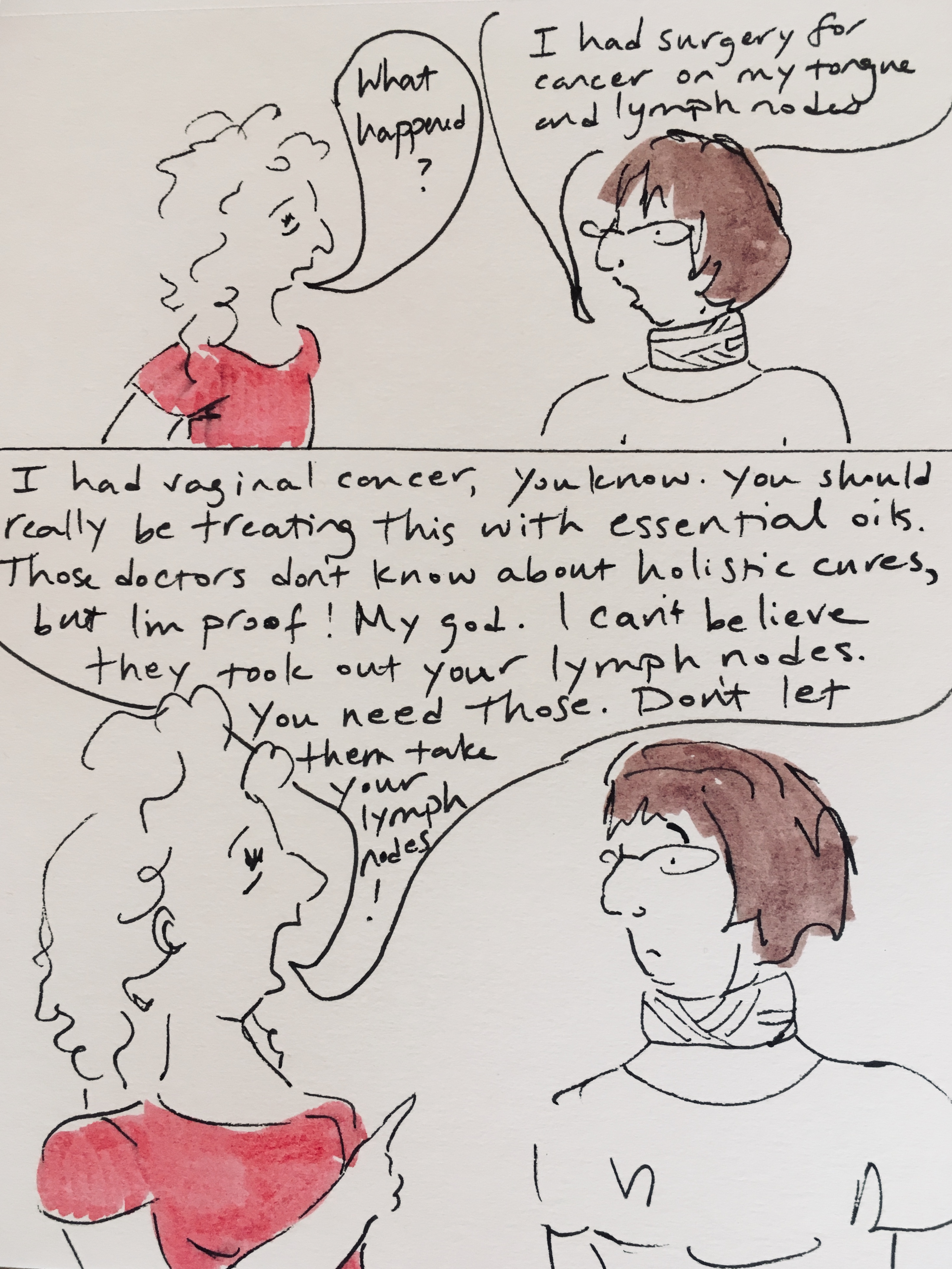
…which, of course, is often well-intentioned. The cartoon below is of an exchange I had with my neighbor about two weeks after my surgery. I was still sporting a large bandage on my neck, which prompted her to ask what happened. I explained that I had been diagnosed with a rare form of salivary gland cancer, and was recovering from surgery to my tongue and neck. This opened the floodgates for a torrent of advice, along with way too many details regarding her own medical history. To be fair, I should have seen it coming. This neighbor is a bit of an oddball; she’s a woman in her sixties who lives with her mother (in her nineties) and is self-employed as a professional pet-sitter/banner-maker (is there a large demand for banners this day and age? Who are her clients? These are things I don’t know and haven’t asked). She pet-sits for our cat, in fact, and this is one reason I’ve been reluctant to press her on certain issues she’s brought up, unabashedly, in conversation.

For example, she once brought us a meal when I was home sick for two weeks with the flu and pneumonia–a kind and neighborly gesture. After thanking her profusely, I asked if she had gotten a flu shot this season. “Flu shot?!?” she asked, incredulously. “Don’t you know what they put in those things? Aborted fetuses, green monkeys. No way, no flu shots or vaccines for me. I only eat organic.” I was so flummoxed that I said nothing in response (though I was tempted to tell her that I don’t think they use pesticides on fetuses or green monkeys). So, when she recently insisted that I treat my cancer with diet and essential oils, I shouldn’t have been surprised. But I was bothered. Did I ask for her opinion? No, I did not. Over the years, I’ve found that some people are especially eager to offer health advice in certain circumstances–when you’re pregnant, for instance, or nursing, or it happens to be a Tuesday. But I haven’t found nearly as many people who are eager to receive it.

Even so, her warnings and ramblings unnerved me enough to email a college friend who’s now a doctor and ask him to reassure me that treating my cancer with conventional Western medicine was a perfectly sound choice. I particularly loved his response: “You can thank your neighbor for offering to murder you. Cancer treatment is one of the areas where Western medicine excels. Eating a healthy diet certainly doesn’t hurt, but to think supplements could treat cancer is total insanity. Gas, migraines, arthritis? Sure, try whatever you want.” Thanks, doc.

Your changing body

This morning, I sat down with a bowl of cantaloupe and blackberries–one of my favorite breakfasts once berries come back in season–and it tasted… odd. The blackberries were good, but the melon was not. It hadn’t gone bad; it was just lacking its familiar flavor. It took me a few bites to realize that it probably wasn’t the fruit, but rather my changing tastebuds (it’s not you, it’s me). I’ve been wondering when this would start to happen with food. It’s unfortunate that it did with cantaloupe, since that’s one of the “Suggestions for Mealtime” in my radiation packet. Oh well. Another small pleasure lost.

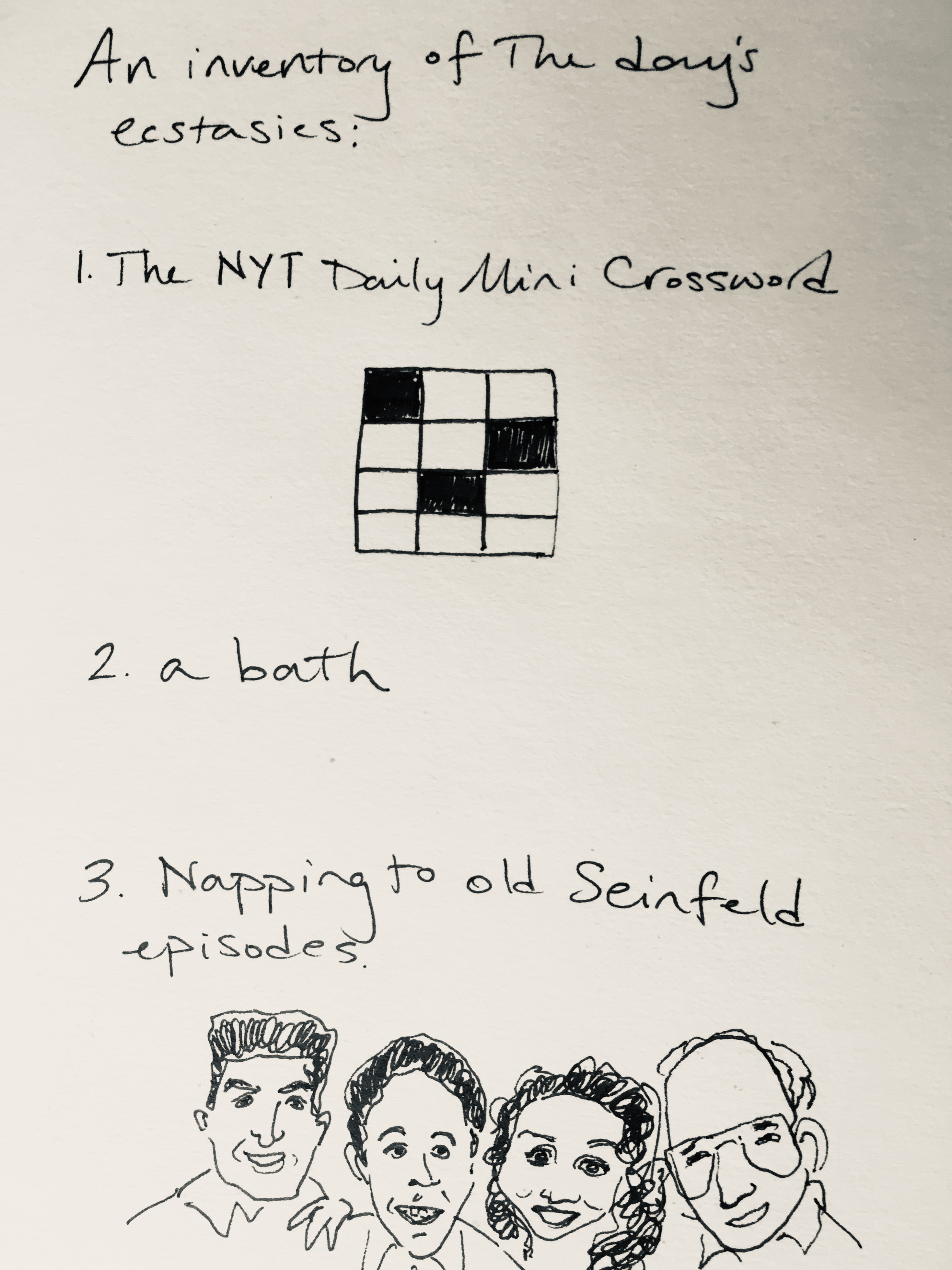
I’ve also begun to feel fatigued from my treatments. Any time my daughter slows down enough to watch a television show, I’ll curl up next to her on the couch and be out for the count within minutes. Like, ZONKED. These naps won’t necessarily be long, but they’ll be deep. My doctors have recommended exercise to combat the fatigue, so I’ve been taking a walk every day, weather permitting. I enjoy the fresh air and time to think (which I have a lot of on my hands lately). Today, I thought about how hard it’s been for me to incorporate exercise, consistently, into my adult life. It was much easier as a kid, since I grew up playing sports. And now that I’m dealing with cancer, I’ve found myself drawing upon that aspect of my youth in unexpected ways–needing the grit and endurance athletics require you to have, I guess. Digging for something in your gut that makes you see it through, whether “it” is a grueling practice or simply walking to the end of the driveway, which was my challenge after surgery.

Having to summon this kind of fortitude again makes me regret the ways in which I’ve dismissed my body and its needs in the past, as women and working parents are, I would venture, sometimes wont to do. Now, I’m having to listen and tend to myself in ways I haven’t for a while, which is probably a good thing.